
Last updated 18 November 2026 — by Adrian Tan, SDM. Marketing guidance, not legal advice. References are to legislation on Singapore Statutes Online and to SPF and Ministry of Law publications, as read on 18 November 2026. Where we interpret how a rule applies, we say so.
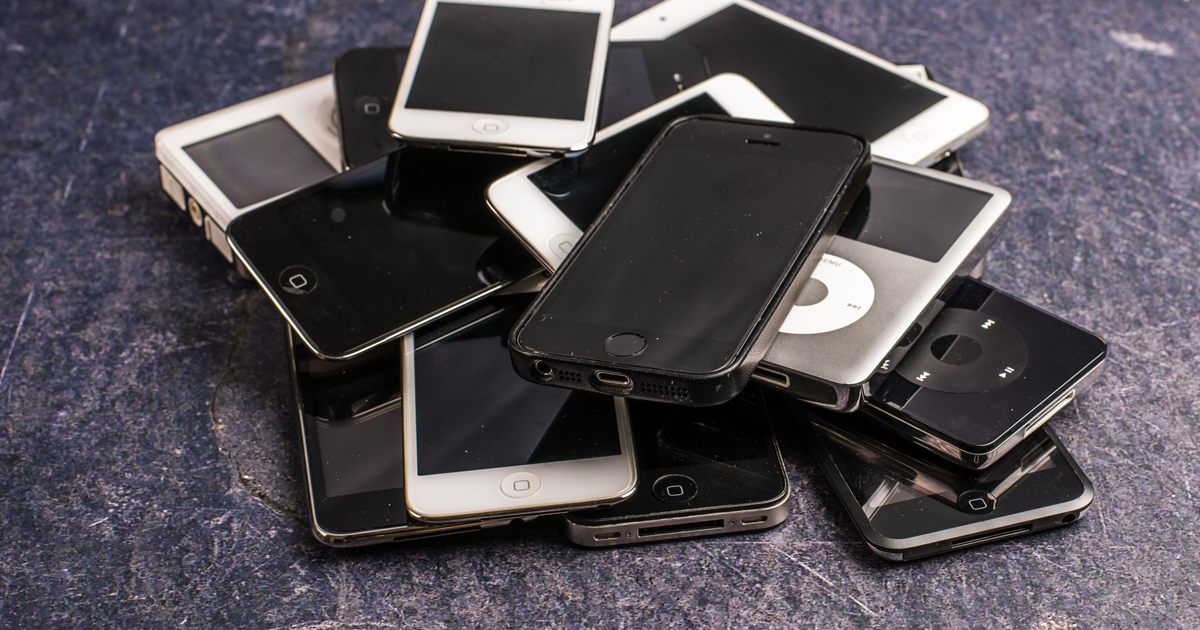
“We buy your old phone. Instant cash. No hassle.” It is one of the most common ad lines in Singapore retail, on shopfronts in Sim Lim and City Plaza, on Carousell, and in search ads that appear the moment someone types “sell iPhone for cash”. Trade-in programmes, pre-owned watch boutiques, gold buy-back counters and refurbished-laptop stores all live on this kind of copy.
Behind it sits a licensing regime most marketers have never read. The Secondhand Goods Dealers Act 2007 requires anyone who deals in certain used goods, including phones, laptops, cameras, watches and gold jewellery, to be licensed or registered with the police. Its rules require dealers to check original ID before buying or selling, screen goods against a police database, and get approval before changing the website address the business uses. Some promises that sound like good customer service, such as “no ID needed”, describe a breach.
This guide is for second-hand and trade-in retailers, pre-owned luxury resellers, jewellers running buy-back counters, and the agencies that build their sites and campaigns. Our guide to marketing parallel imports covers new goods bought outside the official channel; here we deal with used goods.
The short version
- Check the Schedule first. The Act covers only listed goods: phones, computers and tablets, cameras, media players, watches, gold, platinum and gem-set jewellery, pawn tickets, and some metal items. Handbags, clothing and sneakers are not listed.
- Online dealers are covered. The Act expressly includes a person in Singapore dealing in second-hand goods through the internet.
- Do not advertise “no ID” or “no questions asked”. Dealers must see the original NRIC, or passport plus pass, before buying or selling.
- A new website address needs approval. Licensed dealers need prior written approval to change the URL or email address used for the business.
- “Like new” is a legal claim. The CPFTA treats representing used or reconditioned goods as new, or misdescribing their history or grade, as unfair practices.
- Gold buy-back has two extra traps: a compulsory buy-back at a higher price can be pawnbroking, and cash purchases of precious metals over $20,000 must be reported.
Who the Secondhand Goods Dealers Act covers
The statute spells it “Secondhand”, as one word, which matters if you are searching for it. Section 2(1) defines a dealer as “any person who deals in secondhand goods”, and the goods are only those in the Schedule. “Deal in” is not defined, and we have not found a published threshold for occasional sellers.
Two parts of s 2 matter for digital businesses. Section 2(2) says the definition includes “a person in Singapore who deals in secondhand goods through the Internet”, and “shop” covers premises from which the business is run “whether electronically or otherwise”. A trade-in business run entirely through a website and courier pickups is inside the Act. Section 2(3) then presumes that anyone whose shop has scheduled used goods “apparently exposed for sale”, or who holds “an unusual quantity”, is a dealer until they prove otherwise.
A covered dealer needs a licence under s 4, with conditions set by the Licensing Officer under s 5. The penalty for offences under the Act is a fine of up to $20,000, imprisonment of up to 12 months, or both (s 18), and employees and agents can be liable too (s 16). Police can enter and search without a warrant where unlicensed dealing is suspected, and seize goods (s 12).
Licence or registration
Not every dealer holds a licence. An exemption order lets dealers with no conviction or police investigation for offences under the Act, fraud or dishonesty register with the Licensing Officer instead, for a premises, URL or email address, provided they stay registered and do not share an address with another dealer. In practice, many clean operators are registered rather than licensed. That matters for copy: if your client is registered, “licensed second-hand dealer” may be the wrong description. Ask which one they hold before you write it.
Under the Secondhand Goods Dealers Rules, an ordinary licence lasts one or two years, and a temporary licence lasts up to 30 days. The fees are below. Since 1 December 2025, SPF says applications and payments go only through GoBusiness.
| Item | Fee |
|---|---|
| Ordinary licence, 1 year | $165 |
| Ordinary licence, 2 years | $280 |
| Temporary licence (up to 30 days) | $40 |
| Transfer | $44 |
| Change of particulars | $22 |
| Replacement copy | $11 |
The rules that collide with marketing copy
The Act has no advertising section as such. The problems arise because marketing promises can contradict what the Rules require a dealer to do.
“No ID needed” and “instant cash, no questions asked”
Rule 8 requires a dealer, before buying from or selling to a person, to see that person’s original identity document, check it is valid, and check the photo resembles them. For citizens and permanent residents that is the NRIC; for foreigners, a passport plus a work pass or immigration pass. Failing to do so is an offence. Rule 7 then requires a record of each transaction, made on the same day, including the item’s description and serial number (and IMEI for phones), the price, its estimated market value, its source, and the other party’s name, ID number, address, nationality and gender. Section 10 requires records to be kept for at least five years.
So “Sell your phone in 5 minutes, no IC needed” advertises a breach of r 8. “Fast cash, no questions asked” is worse: it invites exactly the customers the regime exists to catch. Speed is a legitimate selling point; write “quoted in minutes, paid on the spot once we’ve checked your IC” instead.
Rule 8 applies to selling as well as buying, and the text does not distinguish online sales. How SPF applies the buyer-ID duty to a remote online sale is not something we have found published guidance on, so ask the Licensing Officer rather than assume a website checkout is exempt.
Screening against police records
Rule 10 requires dealers to screen goods in the police Secondhand Goods Transaction Records System (SHOTS) before buying or selling: phones since 1 November 2013, cameras, computers and media players since 1 January 2014, and watches since 31 July 2023. Goods flagged as stolen or lost must be reported and handed over. Under s 11(2), a dealer offered goods that match a police list must report “without unnecessary delay”. A promise of “instant” payout should leave room for this step.
Changing the website address
Rule 5(1)(b) requires a licensed dealer to get prior written approval before changing “any Uniform Resource Locator (URL) or email address” used for the business. For agencies this is the trap: a rebrand onto a new domain, a separate buy-back microsite, or a switch to a new booking email can all be a change needing approval. Build the approval into the launch plan for a licensed client. Whether the same duty binds registered dealers is not something we have been able to confirm.
Condition, grading and “like new”
The Consumer Protection (Fair Trading) Act’s Second Schedule lists unfair practices that map closely onto second-hand copy:
- Item 5: “Representing that goods are new or unused if they are not or if they have deteriorated or been altered, reconditioned or reclaimed.”
- Item 4: representing that goods are of a particular standard, quality or grade when they are not.
- Item 6: misrepresenting the extent of use or the history of the goods.
- Item 2: representing that the supplier has an approval or affiliation it does not have.
In practice, that means grading has to mean something. If “Grade A” or “Mint” is on a listing, publish what each grade allows (scratches, battery health, box and accessories) and apply it consistently. “Like new” on a phone with a replaced, non-original screen is an item 5 and item 6 problem. “Authorised reseller” for a business with no brand agreement is item 2. Our guide to the Trade Descriptions Act covers the related criminal offence of a false trade description.
Does the lemon law apply to used goods?
Sections 13 to 18 of the CPFTA give consumers remedies for goods that do not conform to the contract, with a presumption that a defect showing up within six months of delivery existed at delivery (s 14(3)). The text contains no exclusion for second-hand goods. The presumption does not apply if it is “incompatible with the nature of the goods or the nature of the lack of conformity” (s 14(4)(b)). Our reading: wear that is normal for the stated age and grade is unlikely to count, but a fault inconsistent with how the item was described can. That makes accurate condition descriptions your best defence, and it is why “sold as is” does not remove the risk. Our warranty and refund policy guide covers how to word your terms.
Gold and jewellery buy-back: two more regimes
Gold, white gold and platinum jewellery, and gem-set jewellery, are on the Schedule. Gold buy-back counters therefore start with the Secondhand Goods Dealers Act, and then meet two more laws.
When a buy-back becomes pawnbroking
Section 3 of the Pawnbrokers Act 2015 looks at the substance of a deal, not its label. Paragraph 1 of the First Schedule deems goods to be pawned if a person sells them and is required to buy them back at a higher price; the difference is treated as profit on a loan. Carrying on pawnbroking, or holding out that you do, without a licence is an offence under s 6, with a fine of up to $50,000. A campaign for “sell your gold now, buy it back within 3 months” therefore needs care: if the customer is obliged to repurchase at a higher price, it looks like a pawn loan, and only licensed pawnbrokers may offer that.
PSPM registration and cash reports
Under the Precious Stones and Precious Metals (Prevention of Money Laundering and Terrorism Financing) Act 2019, regulated dealers include second-hand goods dealers dealing in precious stones and metals, and they must register with the Ministry of Law’s Anti-Money Laundering/Countering the Financing of Terrorism Division (ACD). Acting as, or holding out as, a regulated dealer without registration carries a fine of up to $75,000, up to three years’ jail, or both. ACD lists an application fee of $120, and annual fees of $250 per Class A outlet and $350 per Class B outlet.
SPF’s Suspicious Transaction Reporting Office says a cash transaction report is due for cash or cash equivalent exceeding $20,000, including when a second-hand goods dealer buys precious stones or metals from a customer. Two or more purchases from the same customer in one day are added together, and reports are due within 15 business days. In August 2020, ACD reported that a dealer was fined $9,000 for failing to file one, where eight receipts totalling $28,078 from one customer were treated as one transaction. For marketing, that means “unlimited cash payouts” or “cash for any amount” overpromises; large cash buys come with paperwork.
Industry guidance on PSPM registration, circulated by the Singapore Jewellers Association in 2021, says dealers should not describe themselves as “certified”, “regulated” or “approved by the Ministry of Law”, or use the MinLaw logo without authorisation. Registration is not an endorsement, so do not write it as one. Our guide to jewellery and gold advertising covers purity and pricing claims.
Pre-owned luxury and counterfeit risk
Handbags are not on the Schedule, so a pre-owned bag reseller does not need a second-hand dealer licence for them. Watches and jewellery are, so a boutique that sells bags and watches is partly inside the Act. The bigger risk for luxury resale is counterfeits. Under the Trade Marks Act 1998, possessing goods bearing falsely applied marks for trade carries a fine of up to $100,000, up to five years’ jail, or both.
Recent cases show the scale. In May 2026, police arrested two women over the online sale of more than 400 suspected fake bags, wallets, watches and other items worth over $14,800. In May 2026 the Court of Appeal, in a case brought by Louis Vuitton against an Instagram seller of fake accessories, raised statutory damages from $200,000 to $510,000, as reported by Stomp. In March 2025, police arrested two men after a fake iPhone 16 Pro Max was sold for $600 at City Plaza, seizing 22 phones and pursuing a cheating charge.
Marketing implications: “100% authentic” is a promise you must be able to back with a stated authentication process and a refund remedy. Avoid “replica”, “mirror quality” or “1:1” anywhere near a brand name, which Google’s counterfeit policy prohibits. And as our parallel imports guide explains, using a brand’s name to describe genuine goods is different from implying you are its authorised dealer.
Platforms and listings
- Google Merchant Center accepts condition values of new, used and refurbished, requires condition for used and refurbished items, and says refurbished listings must follow local law. Mislabelling used stock as “new” in a feed is both a policy issue and an item 5 problem.
- Google Ads prohibits counterfeit goods, meaning items with marks identical to or substantially indistinguishable from a brand’s, and treats “replica” or “knock-off” wording beside a brand name as a violation.
- Carousell prohibits fakes and replicas and runs a rights-owner programme for brand takedowns. Our guide to marketplace seller verification rules covers what platforms now check on sellers.
A worked example: launching a trade-in microsite
A phone retailer with a licensed shop wants a new buy-back site on a separate domain, search ads on “sell iPhone Singapore”, and a “cash in 10 minutes” promise. Working through it:
- Licence status. Confirm the client is licensed, not just registered, so the site can say “licensed second-hand goods dealer” accurately. Show the licence number in the footer.
- The new domain. Under r 5(1)(b), a new URL used for the business needs prior written approval. Apply before launch, not after.
- Copy. Replace “cash in 10 minutes, no IC needed” with “quote in minutes; bring your NRIC or passport and pass; paid once checks are complete”.
- Grading. Publish a grade table for the phones the shop resells, and use the same grades in the Merchant Center feed with condition set to “used” or “refurbished”.
- Data. The site will collect NRIC numbers because the Rules require them. Limit collection to what r 7 needs, protect it, and keep marketing consent separate. Our PDPA marketing guide covers the consent and retention side.
A pre-launch checklist
- Is the product on the Schedule? If yes, is the client licensed or registered, and is the copy accurate about which?
- Have “no ID”, “no questions asked” and “unlimited cash” claims been removed?
- Does any new domain, microsite or business email need prior approval?
- Do condition grades have published definitions, applied consistently in listings and feeds?
- Are “authentic”, “authorised” and “warranty” claims backed by a process and a remedy?
- For gold: is any buy-back really a pawn loan, is the business PSPM-registered, and are large cash purchases reported?
The bottom line
Second-hand retail sells on speed, price and trust, and Singapore’s rules are built around the same trust question from the other side. The Secondhand Goods Dealers Act decides who may deal, and its Rules make ID checks, records and police screening part of every transaction. Consumer law turns grades and “like new” into enforceable claims, and gold buy-back can engage pawnbroking and anti-money-laundering rules as well. Copy that is honest about those steps, rather than promising to skip them, is compliant, and it is also the copy that attracts the customers you want.
If you are building or relaunching a trade-in or resale site, our web design team builds e-commerce sites for Singapore retailers, and you can see examples of our work in our case studies. Our web design guide and e-commerce marketing guide cover the wider build, and our guides to selling telecom equipment online and using money images in ads cover neighbouring rules.
Frequently asked questions
Do I need a licence to sell second-hand phones online in Singapore?
If you deal in them, yes. Phones are on the Schedule to the Secondhand Goods Dealers Act, and s 2(2) expressly covers a person in Singapore dealing through the internet. Eligible dealers with a clean record can register under an exemption order instead of holding a licence.
Can a buy-back shop advertise “no IC needed”?
No. Rule 8 of the Secondhand Goods Dealers Rules requires the dealer to see the seller’s original NRIC, or passport plus pass for foreigners, before buying. Advertising that you skip this describes an offence.
Do I need a licence to resell pre-owned handbags?
Not under the Secondhand Goods Dealers Act, because handbags are not on its Schedule. Watches and jewellery are. Consumer law and the Trade Marks Act still apply to bags, so authenticity and condition claims must be accurate.
Can we call refurbished phones “like new”?
Only with care. The CPFTA treats representing goods as new or unused when they have been used, reconditioned or altered as an unfair practice. Describe the condition and what was replaced, and define any grade you use.
Is a “sell your gold and buy it back later” offer legal?
If the customer is required to buy back at a higher price, the Pawnbrokers Act deems the goods pawned and the price difference loan profit, so only a licensed pawnbroker may offer it. A genuinely optional buy-back is different, but take advice before advertising it.
Do we need approval to launch a new website for our trade-in business?
For a licensed dealer, yes. Rule 5(1)(b) requires prior written approval to change any URL or email address used for the business. Build the approval into the launch timeline.