Last updated 18 November 2026 — by Adrian Tan, SDM. Marketing guidance, not legal advice. References are to the Currency Act 1967 and Penal Code 1871 on Singapore Statutes Online, and to MAS publications, as read on 18 November 2026. Where we interpret how a rule applies, we say so.
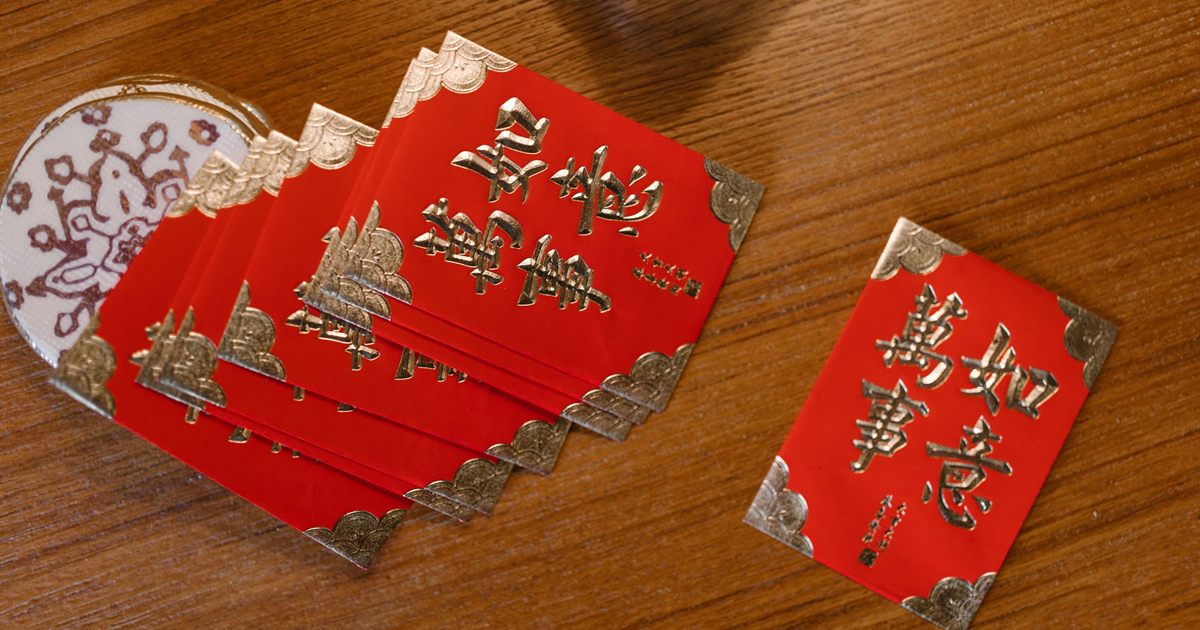
Money is one of the most tempting props in marketing. A fan of fifty-dollar notes says “cashback” faster than any headline, and a red packet with a crisp note peeking out says Chinese New Year before anyone reads the copy. Most creative teams never ask whether they are allowed to use it.
In Singapore the answer is specific, and it is not “anything goes”. Section 20 of the Currency Act 1967 says that, except with the permission of the Monetary Authority of Singapore (MAS), nobody may use a photograph, drawing or design resembling a currency note or coin in any advertisement, or sell merchandise carrying one. MAS has then published conditions under which an advertisement can use currency images without asking first. Get inside those conditions and you are fine. Step outside them and you either apply for permission or change the creative.
This guide is for brands, agencies, e-commerce sellers and content creators who want to show money in ads, social posts, packaging or merchandise. Our guide to using national symbols in marketing covers the flag, the crest and the anthem; here we focus on notes and coins.
The short version
- Section 20 is wide. It covers any photograph, drawing or design resembling a Singapore note or coin, or any part of one, in any size, scale or colour, in any advertisement.
- Advertisements that meet MAS’s conditions do not need permission. The conditions cover dignity, no risk of mistaking the image for real money, a “SPECIMEN” overprint on flat, whole notes, single-sided reproduction, and a size rule for printed copies.
- The print size rule is 60% or 150%. A printed note must be no more than 60%, or at least 150%, of the real note’s length and width.
- Merchandise always needs permission. Products that carry a currency image or design, such as tote bags, packaging and gifts, need MAS approval, whatever the size.
- Realistic prop money is a criminal-law risk, not just a Currency Act one. Under the Penal Code, an imitation that could deceive is presumed to be intended to deceive until the contrary is proved.
- The penalty under s 20 is a fine of up to $2,000, up to three months’ jail, or both.
What section 20 actually says
The section’s heading tells you its purpose: “Restriction on use of photographs, drawing or design of currency notes and coins in advertisements, etc.” It has five working parts.
Section 20(1) says that, except with MAS’s permission, a person must not, “in any size, scale or colour, use any photograph of or any drawing or design resembling any currency note or coin or part thereof, in any advertisement”. It also prohibits importing, manufacturing, selling, circulating or distributing any merchandise or product containing such an image.
Three phrases in that sentence do most of the work for marketers:
- “Photograph of or any drawing or design resembling.” This is not limited to photographs. An illustration, a vector icon modelled on a real note, or an AI-generated image that resembles a Singapore note all fall within the words. The test is resemblance, not how the image was made.
- “Or part thereof.” A cropped corner of a note, a close-up of the portrait or the denomination numeral can still be caught. Cropping does not take an image outside the section.
- “In any size, scale or colour.” Making the image tiny, huge, or recolouring it in your brand palette does not, by itself, change the answer under s 20. The size rule you will see below comes from MAS’s conditions, not from the section.
Section 20(2) goes further for merchandise: MAS’s permission is also needed to import, make, sell or distribute merchandise containing “any design or part thereof used in or on any currency note or coin”. That catches design elements on their own, such as a motif or pattern lifted from a note, even if the product does not show a whole note.
Section 20(3) lets MAS attach conditions to any permission it gives. Section 20(4) separately bars anyone from making or issuing a piece of material “resembling or similar to any coin” issued under the Act or earlier currency laws. That matters for token coins, game pieces and props. Section 20(5) sets the penalty: a fine of up to $2,000, imprisonment of up to three months, or both.
One point of scope. The Act defines “currency” in s 2 as currency notes and coins that are legal tender in Singapore, and MAS’s guidance only addresses Singapore currency. We have not found anything that clearly extends s 20 to foreign notes. That is not the same as saying foreign notes are free to use, as the Penal Code section below explains.
Nor does the section mention screens. Its words are not limited to print, so our reading is that a banner, a social reel or a video ad is an advertisement just as a poster is.
When you do not need permission
MAS’s guidance page, last updated on 24 August 2026, lists the uses that do not need its permission. It cites Gazette Notification No. 2078 of 11 August 2006 as the source of its conditions. Three categories are relevant here.
- An advertisement that meets MAS’s conditions. This is the one that matters most for marketers, and the conditions are set out in the next section.
- Educational publications, and news, factual articles or reports. A finance explainer, a news report about new notes or a factual article about the currency series sits here. A sponsored “article” whose real purpose is to sell a product is, in our view, an advertisement, and you should treat it as one.
- Machines that accept currency, showing which notes or coins they take. A vending machine or kiosk can show the denominations it accepts.
Everything else needs permission. In particular, MAS says permission is needed for an advertisement that does not meet its conditions, and for any merchandise or product containing a reproduction of a note or coin, or a design used on one. There is no “free gift” exception: a tote bag printed with a note design and handed out at a roadshow is still merchandise being distributed.
MAS’s conditions, one by one
The conditions fall into two groups: general conditions for both notes and coins, and additional conditions for notes only. An advertisement has to meet every condition that applies to it.
General conditions for notes and coins
- Keep the dignity, integrity and image of the note or coin. Creative that tears, burns, crumples for comic effect or defaces a note is the obvious risk.
- It must not be possible to mistake the image for genuine currency. This is the condition that rules out hyper-real “money rain” visuals and realistic cash stacks.
- No distortion of the President or any national symbol. Singapore notes carry the portrait of Encik Yusof Ishak and national symbols, so face-swaps, speech bubbles, stickers or filters placed over the portrait are a problem.
- Nothing offensive or against the public interest.
- Printed on material clearly different from real coins, paper notes or polymer notes. A glossy brochure is clearly different; polymer-feel cards cut to note size are not.
Additional conditions for notes
- Keep the proportions. An enlarged, reduced or angled image must keep the note’s proportions. Stretching a note to fill a banner slot breaks this.
- SPECIMEN on whole, flat notes. If a whole note is shown flat to the camera, it must carry the word “SPECIMEN” in black bold lettering, placed diagonally, and it must not cover the portrait.
- The print size rule. Non-electronic copies, such as printed ads, brochures and books, must be at least 150% of the real note’s length and width, or no more than 60% of both.
- Single-sided. Copies must not be double-sided; the reverse must be blank.
What the size rule does not do
Two misunderstandings come up repeatedly. First, the size rule is not the whole test: a 50%-size printed note that is double-sided, distorted or realistic still fails. Second, MAS limits the size rule to non-electronic copies, so a banner or video frame is not measured against 60% and 150%, but it must still meet the other conditions. MAS has published nothing more on how size is judged on screens.
Prop money, realistic stacks and the Penal Code
The Currency Act is the advertising rule. The Penal Code is the criminal backstop, and it is far more serious. Section 489A of the Penal Code 1871 makes counterfeiting currency or bank notes an offence punishable with up to 20 years’ imprisonment and a fine. Its definitions apply to the related offences in ss 489B to 489I. “Currency” there includes any note or coin “which is legal tender in the country or territory in which it is issued”, and “bank note” covers notes of banks “in any part of the world”. Foreign currency is therefore covered.
The related offences include using counterfeits as genuine or trafficking in them (s 489B, up to 20 years and a fine), possessing them with intent to use them as genuine (s 489C, up to 15 years and a fine), and making or possessing instruments or materials for counterfeiting (s 489D, up to 20 years and a fine).
The provision a creative team most needs to know is section 28, which defines “counterfeit”. It means causing one thing to resemble another, intending to deceive or knowing that deception is likely. Explanation 1 says the imitation need not be exact. Explanation 2 says that when the resemblance is such that a person might be deceived, intent to deceive is presumed until the contrary is proved.
No marketer sets out to counterfeit money, but a production house that prints a few hundred realistic “prop” fifty-dollar notes for a shoot, leaves them on set, and lets them circulate has created exactly the kind of object these sections are about, and the presumption in s 28 means the burden of explaining runs the wrong way. Police news releases on counterfeit cases have involved photocopied and home-printed notes, not sophisticated forgeries. We have not found a Singapore case involving advertising props, and we are not suggesting one exists. The point is that “it was only a prop” is not a design control.
Our practical rule: never print realistic notes, Singapore or foreign, for a shoot or a stunt. If you need cash on camera, use real notes handled under supervision, or reproductions that are obviously not money, and run the result past the MAS conditions.
Foreign currency: a grey area, not a free pass
Some teams switch to US dollar or euro images on the assumption that the Singapore rules only cover Singapore money. Partly true, and risky. Section 20 and MAS’s conditions are drafted around Singapore currency, so whether they reach a foreign note is unclear. We would not tell a client that foreign notes are exempt from s 20. But the Penal Code counterfeiting provisions plainly cover foreign currency, so a realistic printed foreign note carries the same criminal risk as a Singapore one.
A stack of US hundred-dollar bills is also the visual language of scam ads. For financial services, see our guides to remittance and money-changer advertising and investment offer advertising.
Scenario table: common campaign uses
| Use | Ad or merchandise? | Our reading |
|---|---|---|
| Printed CNY flyer showing a note in an ang bao, at 50% size, SPECIMEN, one-sided | Advertisement | Can meet the conditions if the image keeps the note’s dignity and cannot be mistaken for real money |
| Instagram reel of a presenter fanning real $50 notes for a cashback promo | Advertisement | Size rule does not apply on screen; check dignity, distortion and realism. Avoid whole flat notes without SPECIMEN |
| Website hero with an illustrated $10 note recoloured in brand colours | Advertisement | Still “resembling” a note. Keep proportions, no distortion of the portrait; recolouring alone does not take it out of s 20 |
| AI-generated image of “money raining” on a shopper | Advertisement | Resemblance is the test, not how the image was made. Hyper-real notes risk the “mistaken for genuine” condition |
| Red packets printed with a note design, given free with purchase | Merchandise | Permission needed under s 20(1)(b) and (2), whatever the size |
| Chocolate coins or tokens shaped like Singapore coins | Merchandise | Permission needed; s 20(4) also bars material resembling Singapore coins |
| Printed realistic “prop” notes for a video shoot | Production prop | Do not do it. Penal Code s 28 presumption risk, plus s 20 |
| Blog explainer on how the portrait series notes look | Educational / factual | Outside the permission requirement, if it is genuinely educational rather than an ad |
Worked examples
1. A bank’s Lunar New Year campaign
A bank wants a hero visual of a hand slipping a new note into a red packet, running on outdoor posters, in-branch brochures and social media. The posters and brochures are printed, so the size rule applies: either shrink the note to 60% or less of its real size, or blow it up to 150% or more. A life-size note in a real-size packet, which is what a photographer will naturally shoot, falls in the middle band. A note that is partly inside the packet is not “whole and flat”, so the SPECIMEN condition may not bite, but our advice is to apply it anyway where the note is clearly readable.
There is a better creative answer too. MAS has been urging people to give “Fit” notes or e-hong baos instead of new notes. In its January 2026 release, MAS said more than 16 million Fit notes were exchanged in 2025, about 40% more than the year before, and that 2 in 3 people in its July 2025 survey of 1,853 people were open to receiving Fit notes. A visual built around a QR-code e-hong bao, or an envelope with no note showing at all, avoids the currency question and lines up with the official message. Our Chinese New Year marketing guide covers the rest of the season’s playbook.
2. An e-commerce cashback promotion
A marketplace seller wants a TikTok video showing $5 notes flying out of a phone screen. This is an advertisement on screen, so the print size rule does not apply. The questions are whether the animated notes keep their proportions, whether any whole note sits flat to the camera without SPECIMEN, and whether the effect looks like real money. A stylised, flat-colour coin icon or a “$5” numeral communicates cashback just as well and needs none of this analysis.
3. Branded packaging for a gift set
A confectioner wants festive packaging printed with a pattern taken from the back of a Singapore note. This is merchandise, and s 20(2) catches “any design or part thereof used in or on any currency note or coin”. Permission is needed before production. The WTO’s import-licensing entry for MAS also notes that only Singapore-registered importers can obtain licences for imported goods, that MAS charges no import licence fee or deposit, that applicants should check with MAS about other fees such as royalties, and that applications should be made before the goods arrive.
How to apply to MAS
When your use needs permission, MAS asks applicants to use its feedback form at go.gov.sg/mas-contact-us and to provide:
- the final design of the advertisement or product;
- the reasons for reproducing the currency image; and
- a contact number.
MAS replies by email or phone. It has not published a standard turnaround time, so build in buffer and do not commit a print date until you have a reply. Section 20(3) lets MAS attach conditions to a permission, so read the approval carefully and brief your printer on any conditions. Where an application is refused, the WTO entry says MAS generally gives reasons; there is no appeal under the Act, though judicial review is available.
Platform rules on money imagery
Google and Meta do not, as far as we can find, publish a rule that bans images of money as such. Google’s “Enabling dishonest behavior” policy prohibits the creation of fake or false documents such as passports or diplomas. Its counterfeit goods policy is about trademarks, but it treats violations as egregious and can suspend accounts without warning. Meta’s prohibited commercial practices policy, updated on 9 September 2026, now applies one set of rules to organic content and ads, and says its rules on fake documents and money muling have moved to its Restricted Goods and Services standards.
The practical platform risk is pattern-matching: piles of cash and get-rich visuals are the stock imagery of scam ads and attract review. Our guide to Singapore’s online advertising rules covers how platform review and local law interact.
A pre-production checklist
- Do we need money in the visual at all? A numeral, icon or e-hong bao often does the same job.
- Is any item merchandise? Packaging, gifts, giveaways and apparel need MAS permission before production.
- Is the advertisement printed? If yes, measure: no more than 60%, or at least 150%, of the real note’s length and width.
- Is a whole note shown flat? Add SPECIMEN in black bold diagonal type, clear of the portrait.
- Are proportions kept, the reverse blank and the portrait undistorted?
- Could anyone mistake it for real money? If the answer is “maybe”, redesign.
- No printed prop notes, Singapore or foreign, for shoots or stunts.
- Keep a record of how each condition was met, or of MAS’s permission and its conditions, with the final artwork.
The bottom line
Singapore does not ban money from marketing, but it does not leave it to taste either. Section 20 of the Currency Act requires MAS’s permission for any advertisement using a currency image unless the ad meets MAS’s published conditions, and for all merchandise carrying one. The real danger sits outside the Currency Act, in realistic props that the Penal Code treats very seriously. Most of the time the best creative answer is to show the idea of money, not the money itself.
If you want campaigns that work hard inside these rules, our performance marketing team builds and runs them for Singapore brands. You can see examples of our work in our case studies. Related guides cover copyright in marketing images, restricted words in brand names, lucky draws and giveaways and AI claims in marketing, and our performance marketing guide ties them together.
Frequently asked questions
Can I use pictures of Singapore dollars in an advertisement?
Yes, without asking MAS, if the advertisement meets all of MAS’s conditions: the note’s dignity and proportions are kept, it cannot be mistaken for real money, the portrait is not distorted, a whole flat note carries SPECIMEN, it is single-sided and, if printed, it is no more than 60% or at least 150% of the real note’s size. Otherwise you need MAS’s permission under s 20 of the Currency Act.
What is the penalty for using currency images without permission?
Under s 20(5) of the Currency Act 1967, a fine of up to $2,000, imprisonment of up to three months, or both. Making realistic imitation notes can also engage the Penal Code counterfeiting offences, which carry far heavier penalties.
Does the 60% and 150% size rule apply to digital ads?
MAS’s size condition is expressed to apply to non-electronic copies such as print, brochures and books. Screen ads are not measured against it, but they must still meet the other conditions, including SPECIMEN on a whole flat note and no chance of being mistaken for genuine currency.
Do I need permission to print currency designs on packaging or ang bao?
Yes. Merchandise or products containing a reproduction of a Singapore note or coin, or a design used on one, need MAS’s permission under s 20(1)(b) and s 20(2), whatever the size, and whether the item is sold or given away.
Can we use foreign banknotes instead?
Section 20 and MAS’s guidance are drafted around Singapore currency, so their reach to foreign notes is unclear, and we would not treat foreign notes as exempt. The Penal Code counterfeiting provisions do cover foreign currency, so realistic printed foreign notes carry the same criminal risk.
How do I apply to MAS to use a currency image?
Through MAS’s feedback form at go.gov.sg/mas-contact-us, with the final design, your reasons for reproducing the image and a contact number. MAS replies by email or phone and may attach conditions. It has not published a standard turnaround time, so apply well before production.