Last updated 27 September 2026 — by Adrian Tan, SDM. Marketing guidance, not legal advice. The Food Regulations are made under the Sale of Food Act and administered by the Singapore Food Agency; the SIFECS Code is administered by the Health Promotion Board. For a specific product label or campaign, take advice from a regulatory lawyer or SFA.
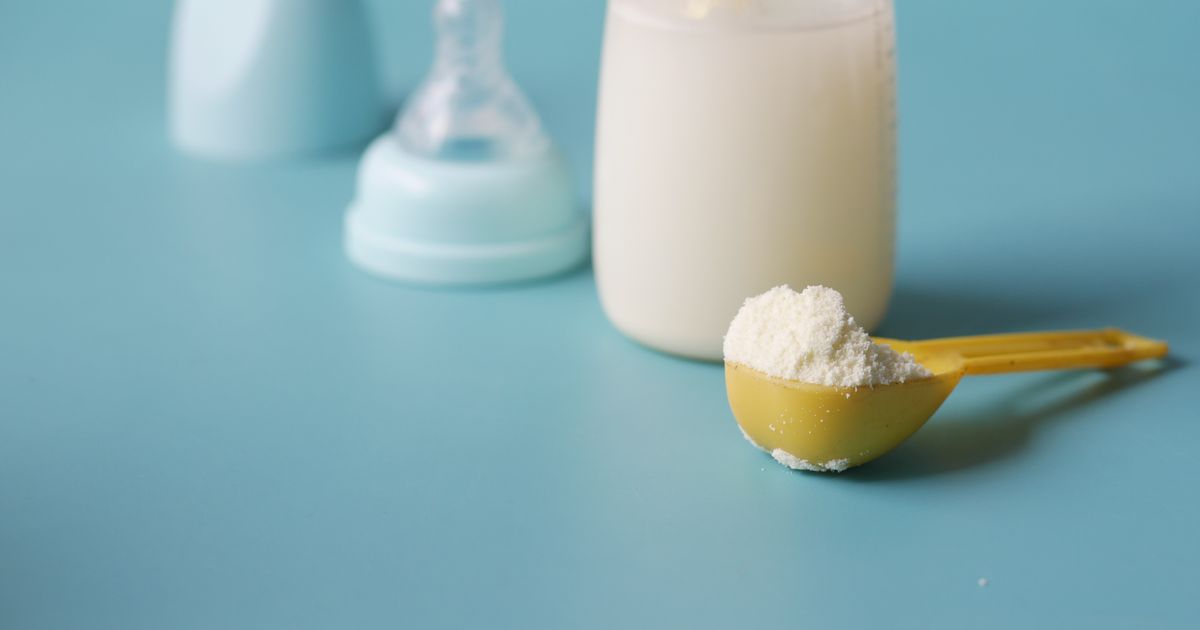
Formula milk is one of the most heavily marketed categories in Singapore’s grocery aisles and parenting feeds, and one of the most tightly restricted. The restriction is not one rule but two, and they sit on either side of the same line: 12 months of age.
For formula intended for infants up to 12 months, regulation 254(3) of the Food Regulations has, since 1 September 2019, made it an offence for a label or an advertisement to carry health claims, comparisons with breast milk, pictures of babies or of pregnant or nursing women, idealising claims, or “enriched with” style nutrient claims. On top of that statutory floor, the SIFECS Code of Ethics prohibits promoting or advertising those products at all, in any channel, including online.
For growing-up milk above 12 months, the picture changes. This guide explains where the line falls, what each layer prohibits, why the frontier between them is where most compliance problems now arise, and what brands, retailers, parenting influencers and agencies should do about it.
Why Singapore regulates formula marketing
The current rules came out of a 2017 review. After the Competition Commission of Singapore studied the formula market, the Ministry of Health announced in May 2017 that the SIFECS Code would be extended to all infant formula for infants up to 12 months, and that the then Agri-Food and Veterinary Authority would tighten labelling and advertising rules “to prohibit the use of nutrition/health claims and idealised images”. HPB also committed to public education that all infant formula sold in Singapore, regardless of price, meets the safety standards and nutritional requirements.
That last point is the policy logic in one sentence. Every infant formula on sale has to meet the compositional standards in regulation 252, so claims implying that one brand makes babies smarter or healthier than another tend to mislead parents and push prices up. The rules therefore target premiumisation and the idea that formula is equivalent to breastfeeding, rather than the sale of formula itself.
What counts as infant formula
Regulation 252(1) defines infant formula as “any food described or sold as an alternative to human milk for the feeding of infants”, and the Food Regulations define an infant as a person not more than 12 months of age. SFA’s FAQ lists soy formula, hydrolysed milk protein formula, whey protein formula and lactose-free formula as examples, where they are labelled for infants 0 to 12 months.
Three scope points trip marketers up:
- A product labelled across the line is infant formula. SFA’s FAQ says a formula labelled for an age range starting in infancy and extending beyond 12 months is claimed to be suitable for infants, so it must meet every infant formula requirement. A qualifying note that a health claim only applies “from 12 months” does not rescue it.
- Other infant foods are outside. The 2019 amendments do not apply to cereals, purees and other complementary foods.
- Formula for special medical purposes is outside the 2019 amendments, for example formula for premature infants or infants with metabolic disorders.
Layer one: regulation 254(3), the statutory limits
Regulation 254(3) applies to “the label on a package of any infant formula for infants, or an advertisement about any infant formula for infants“. Both must not contain:
| Reg 254(3) | Prohibited | What it looks like in a campaign |
|---|---|---|
| (a) | A claim that the formula, or any component, ingredient or feature of it, has or may have a health effect | “Supports brain development”, “builds immunity”, “for healthy digestion” |
| (b) | A claim that directly or indirectly compares the formula, or any component, to breast milk | “Closest to breast milk”, “inspired by mother’s milk”, “the same HMO found in breast milk” |
| (c)(i) | A pictorial, graphic or symbolic representation of an infant or infants | Baby photos, illustrated babies, baby mascots |
| (c)(ii) | A representation of a pregnant or nursing woman | Bump shots, nursing imagery, mum-and-baby lifestyle scenes |
| (c)(iii) | Words like “humanised” or “maternalised” | “Humanised milk protein” |
| (c)(iv) | A claim that directly or indirectly idealises the use or effect of the formula | “The best start in life”, images implying exaggerated growth or achievement |
| (d) | Claims about the energy, carbohydrate or other nutritive property of ingredients not listed in reg 252(5) and (6) | “Contains vitamin D”, “added with vitamins and minerals”, “enriched with iron” |
| (e) | For listed ingredients, a claim that the formula is enriched, fortified or an excellent source | “Excellent source of DHA”, “25% higher in DHA”, “high in nucleotides” |
The examples in the right-hand column for (d) and (e) are not ours; most are the regulation’s own printed examples of prohibited text claims.
The definitions are wider than they look
Regulation 254(6) defines a “claim” as “any message or representation”, including “a pictorial, graphic or symbolic representation”. A “health effect” is any effect on the body, including growth and development, physical or mental performance, and biochemical, physiological or functional processes. And “pictorial representation” expressly includes “a graphic representation and an anthropomorphic or humanlike depiction“.
For marketers, that last definition matters most. A cartoon baby mascot, an illustrated bear dressed as a toddler or an AI-generated infant in a banner is a pictorial representation of an infant. SFA’s FAQ adds that text or images relating to intellectual potential, such as a mortarboard or graduation gown, are treated as implied health-effect claims, and so are words or images of anatomy or medical equipment suggesting prevention or cure.
What regulation 254 still allows
- Hydrolysed milk protein or whey protein. Regulation 254(4) expressly allows a label or advertisement to state or imply their presence.
- Presence of listed ingredients. Ingredients permitted by reg 252(5) and (6) — such as DHA and ARA, nucleotides, GOS, 2′-fucosyllactose and lactoferrin — may be named as present, provided the claim does not imply enrichment, fortification or a health effect, and makes no reference to breast milk.
- Named microorganisms. SFA accepts presence claims for probiotics declared with their exact identity; generic “contains probiotics” is treated as implying a health effect.
- Baby-related objects. SFA says cots, prams, rattles, mittens and young animals are allowed, provided they do not suggest a prohibited claim.
- The nutrition information panel and ingredient list remain required and are not prohibited claims.
Layer two: the SIFECS Code prohibits the advertising itself
The Sale of Infant Foods Ethics Committee Singapore Code of Ethics is administered by HPB and applies to the promotion and distribution practices of breastmilk substitutes for infants 0 to 12 months by the infant nutrition industry, distributors and retailers. Its fifth edition took effect on 1 January 2019, extended the scope from 6 to 12 months, and introduced a penalty framework.
Clause 4.1 is the core rule: “Promotion or advertising (in all retail, online or other electronic channels, including but not limited to broadcast, print and out-of-home media) featuring products and infants within the scope of the Code is prohibited.” It then lists practices that count, including:
- Inducements: discount vouchers, gifts, loyalty points, coupon codes, bonuses, cashback, free samples including taste sampling, and tie-in sales.
- Nutrition and health claims, and terms suggesting a product is equivalent or superior to breastfeeding.
- Special displays and shelf labelling: shelf-talkers, wobblers, block-stacks and end-gondola displays.
- Cross-promotion: materials that encourage progression to formula outside the Code’s scope, such as a “step diagram”, or displaying promoted out-of-scope formula alongside in-scope products, in retail and online.
- Educational materials on infant feeding carrying product names, from booklets and growth charts to calendars.
- Mother and baby events used to promote in-scope products.
Two further clauses reach digital marketing directly. Clause 4.4 prohibits company personnel from giving parents advice on infant feeding; that should come only from doctors, dietitians, nutritionists, nurses and lactation consultants not employed by industry. Clause 4.9 prohibits “solicitation and use of personal information in any form for the purpose of promotion” of in-scope products, including by third parties. A “baby club” sign-up that collects due dates to send formula offers is squarely within it, whatever its PDPA consent says. Our guide to PDPA-compliant marketing and tracking covers the data law; this is an additional restriction on purpose.
How SIFECS is enforced
The Code is not legislation, and it describes itself as binding on all stakeholders by obligation rather than by statute. Its teeth are reputational. Appendix 3 sorts violations into two categories. Category B violations are those with wide reach or high visibility to mothers, and the Code’s own examples include price discounting, vouchers, free gifts and samples, and “advertising of in-scope products on all channels (e.g. broadcast & print media, social media post, web article, blog post, EDM)”. If a violation is not rectified after a warning letter, the sanction is publication of the violation on HPB’s website.
For a formula brand, being named by the health promotion authority for marketing to new parents is a far larger cost than the fine for a regulation 254 breach, which under regulation 261 is capped at $1,000, or $2,000 for a repeat conviction.
The frontier: growing-up milk and cross-promotion
Neither layer bans marketing formula for children over 12 months. Growing-up milk remains advertisable, and claims approved for foods for older children may still be used. But SFA’s FAQ attaches a condition: traders “should, in no way, relate these claims to infants”. And SIFECS clause 4.1(d) prohibits cross-promotion that encourages progression from in-scope products.
That is where the practical difficulty lies, because formula brands typically sell a numbered range under one brand name, with packaging that looks alike from stage to stage. The research bears this out. A qualitative study published in Maternal & Child Nutrition in 2024, based on interviews with 14 mothers and 20 health workers in Singapore, found that after the 2019 restrictions mothers and health workers still reported digital marketing, product line extensions with toddlers’ milk and milk for mothers, and sponsorships in healthcare settings. The authors recommended extending SIFECS to toddlers’ milk and prohibiting cross-promotion and digital marketing.
For marketers, the lesson is not that brand advertising for growing-up milk is unlawful; it is that the older-child campaign must not do the work of an infant formula campaign by other means. Specifically:
- Do not show infants in growing-up milk creative. A 10-month-old in a stage-3 ad relates it to infants.
- Do not use the brand-range ladder. “Stage 1, 2, 3, 4 — the journey starts here” is the step diagram the Code names.
- Keep stages apart in listings and search. A marketplace store that bundles stage 1 with a stage 3 promotion, or a Shopping campaign that serves a stage 3 discount on a stage 1 query, is the online version of the prohibited shelf display.
- Keep health claims off pages that also sell stage 1. A brand page listing the full range under a banner that says “supports brain development” relates that claim to the infant product on the same page.
Who needs to act
Formula brands and distributors carry both layers. The practical work is a creative and claims review of every asset that mentions a 0–12 month product, and a structural separation of stage-1 products from growing-up milk marketing.
Retailers, pharmacies and marketplaces. SIFECS names distributors and retailers expressly, and clause 4.1 includes vouchers, coupon codes, cashback and tie-in sales. A platform-wide mega-sale voucher that applies to stage-1 formula, or a “bundle and save” across stages, is the problem. Exclude in-scope SKUs from site-wide promotions; our 9.9, 11.11 and 12.12 campaign guide explains how those mechanics are usually built.
Parenting influencers and KOLs. A sponsored post for an in-scope product is advertising under clause 4.1, and a sponsored post featuring a baby is a pictorial representation of an infant under regulation 254. Our guide to influencer and KOL marketing covers disclosure; for this category the brief has to go further and exclude stage-1 products from paid content.
Agencies. An agency that builds a performance campaign for a formula brand without separating the stages is building the cross-promotion the Code prohibits. Put the 12-month line into audience, keyword and catalogue structure, not just the copy review.
Worked examples
1. The launch video. A brand’s YouTube pre-roll for a new stage-1 formula shows a smiling infant and the line “our most advanced formula yet, inspired by nature’s best”. It contains a representation of an infant, an idealising claim and an indirect comparison with breast milk under regulation 254(3), and under SIFECS clause 4.1 it should not run at all.
2. The stage-3 search ad. A growing-up milk ad says “Stage 3 for 1–3 years. Contains DHA.” That is a presence claim on an out-of-scope product. If the same campaign also bids on “newborn formula” and the landing page opens with the full stage 1–4 ladder, it becomes cross-promotion. Negative the infant terms and give stage 3 its own page.
3. The pharmacy e-voucher. A pharmacy chain’s app pushes “$5 off all baby milk” to members. If stage-1 formula is included, that is a Category B inducement under the Code. Exclude the in-scope SKUs before it goes out.
4. The baby club. A brand’s landing page offers a free parenting e-book in exchange for an expected due date and mobile number, then sends formula offers timed to the baby’s age. Clause 4.9 prohibits soliciting personal information to promote in-scope products, including through third parties, whatever the consent form says.
Frequently asked questions
Can infant formula be advertised in Singapore?
The Food Regulations do not ban it outright, but regulation 254(3) prohibits labels and advertisements for infant formula (infants up to 12 months) from containing health-effect claims, breast-milk comparisons, images of infants or pregnant or nursing women, idealising claims and enrichment claims. The SIFECS Code of Ethics goes further and prohibits promotion or advertising of these products in all channels, including online.
Can a formula ad show a baby in Singapore?
Not for infant formula. Regulation 254(3)(c)(i) prohibits a pictorial, graphic or symbolic representation of an infant, and “pictorial representation” includes a humanlike depiction, so illustrations and mascots count as well as photographs.
Do the rules apply to growing-up milk for toddlers?
Regulation 254 and the SIFECS Code apply to formula for infants up to 12 months. Growing-up milk for older children can be advertised under the general food claims rules, but SFA says approved claims must in no way be related to infants, and SIFECS prohibits cross-promotion that encourages progression from infant formula.
What is the penalty for breaching the infant formula advertising rules?
Breaching the Food Regulations is an offence under regulation 261, with a fine of up to $1,000, or $2,000 for a second or subsequent conviction. SIFECS breaches are handled by warning letters, and unrectified violations may be published on HPB’s website.
Can I say my infant formula contains DHA?
Yes, as a presence claim, because DHA is a permitted ingredient under regulation 252(6). You cannot say it is enriched with DHA, an excellent source of DHA or higher in DHA, and you cannot link DHA to a health effect such as brain development.
The takeaway
Singapore’s formula rules are built around one number. Below 12 months, the Food Regulations strip the persuasive toolkit out of any advertisement that does run, and the SIFECS Code says it should not run in the first place. Above 12 months, marketing is allowed, but it must stand on its own and not become a route back to the infant product.
For marketers, compliance is mostly structural: separate the stages in creative, catalogues, keywords, promotions and data capture, and review every asset against regulation 254’s list, including the illustrations. The statutory fine is small; being named by HPB for marketing formula to new parents is not.
If your campaigns need that separation built into targeting and measurement, that is part of what our performance marketing team does; see our client case studies. Start with our guide to performance marketing in Singapore, and read this with our guides to food advertising claims, health product advertising, age assurance in marketing and product claims under the Trade Descriptions Act.