Last updated 21 October 2026 — by Adrian Tan, SDM. Marketing guidance, not legal advice. References are to Part 4B of the Resource Sustainability Act 2019 and the Resource Sustainability (Beverage Container Return Scheme) Regulations 2026 on Singapore Statutes Online as at 21 October 2026, read with NEA, BCRS Ltd and IRAS guidance. Where we interpret how a rule applies to a promotion, we say so.
Since 1 October 2026, every pre-packed drink in a plastic bottle or metal can sold in Singapore has had to carry a deposit mark. The six-month grace period that let old, unmarked stock sit on shelves next to new stock ended on 30 September. Most of the coverage so far has been written for shoppers: where the machines are, how to get your 10 cents back. Very little of it is written for the people who sell and promote drinks.
That gap matters. The Beverage Container Return Scheme (BCRS) is not just a recycling programme. The law behind it controls what you may display, how you may discount, whether you can give drinks away “deposit-free”, what goes on a receipt, and what an importer has to build into its unit cost before a single bottle is listed. Several of the promotions that drinks brands, supermarkets, e-commerce sellers and event organisers ran for years now need a second look.
BCRS in one paragraph
BCRS is Singapore’s deposit-return system for drink containers, set up under Part 4B of the Resource Sustainability Act 2019 and run day to day by the licensed operator, BCRS Ltd, under NEA oversight. A S$0.10 deposit (regulation 9 of the 2026 Regulations) is added when a marked drink is sold, passed down the supply chain and paid by the consumer, who gets it back by returning the empty container to a return point. The scheme started on 1 April 2026. Until 30 September 2026, marked and unmarked stock could be sold side by side. From 1 October 2026 (the date fixed by regulation 7), only marked drinks can be supplied. Unmarked old stock carries no deposit and cannot be refunded.
Early numbers suggest the public has taken to it: in a written parliamentary reply on 8 September 2026, the Minister for Sustainability and the Environment said more than 20 million containers had been collected in the first five months. No return rate or enforcement figures had been published as at the date of this article.
Which drinks and which businesses are caught
The containers
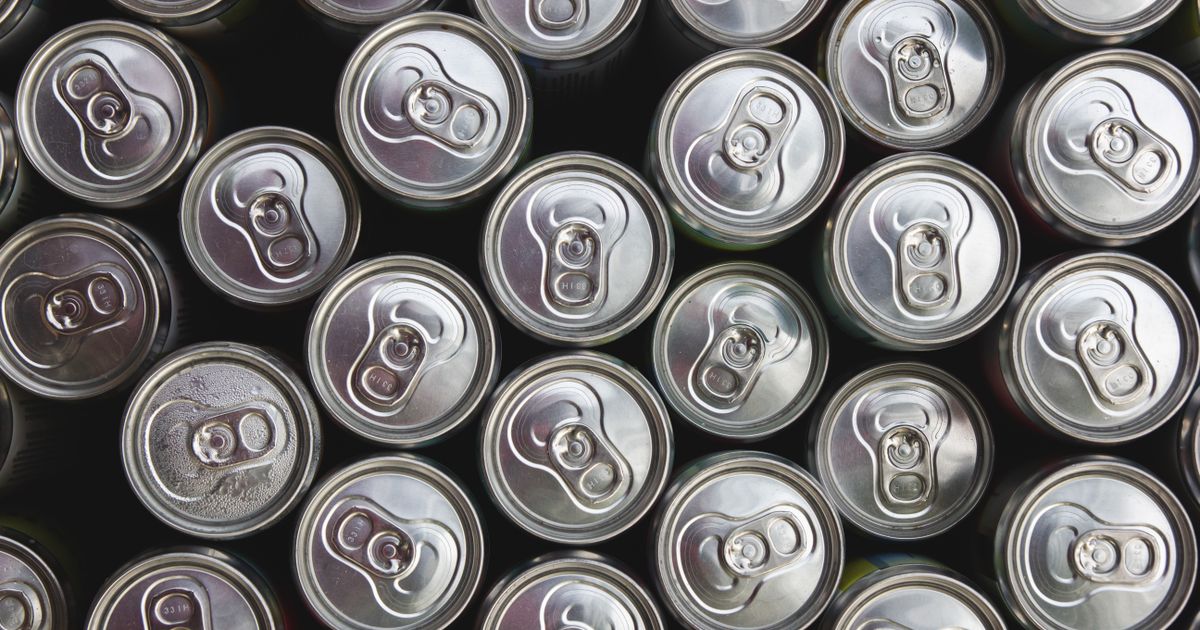
The scheme covers pre-packaged drinks in containers made of plastic or metal, alone or combined with each other but with no other material (regulation 3), with a capacity from 150 ml to 3,000 ml inclusive (regulation 4). In practice that means cans, PET bottles and similar, from a small juice bottle to a large bottle of soft drink. Glass, cartons and pouches are outside the definition.
Regulation 5 excludes some liquids that sit in drink-shaped containers but are not really beverages: drinks for special medical purposes, decorative or flavouring liquids such as caramel syrup or whipped cream, flavouring agents, soups and extracts, semi-liquid or viscous foods, and medicinal and health products. A brand selling a sauce or a syrup in a PET bottle should confirm which side of that line its product sits on before it prints new labels.
The businesses
The Act sorts the supply chain into producers and everyone else who supplies.
- Producers are whoever imports the drink into Singapore or manufactures it here, including contract manufacturers (section 23M(2)). There is no minimum volume. BCRS Ltd’s FAQ is clear that every Singapore company that imports must register in its own name, even if it buys from an overseas facility that is already registered.
- Everyone who supplies a marked drink, from distributor to supermarket to café to online seller, must collect the deposit from the next buyer (section 23Q(3)).
- “Supply” includes giving drinks away free, so sampling teams, event sponsors and corporate gifting are inside the scheme. It excludes an individual acting in a private capacity (section 23M(1)).
- Individuals importing for personal use, not in the course of business, are not producers (section 23M(3)).
Some channels sit outside the marking duty. Regulation 8 exempts drinks supplied for export, drinks consumed on conveyances entering or leaving Singapore, and duty-free sales to departing travellers in sealed, tamper-evident bags. The supplier must keep five years of records to rely on the exemption.
The definition that catches marketers: “offer to supply”
Section 23P makes it an offence to supply, or offer to supply, a drink in scope without the mark and a registered barcode. Section 23M(1) defines offering to supply to include exposing or displaying a product as an invitation to treat. That is the definition retailers and e-commerce sellers need to read twice. After 1 October 2026, it is not only the sale of an unmarked can that is caught. A shelf display, a chiller full of old stock, an online product listing or a social post that invites orders for unmarked drinks is arguably an offer to supply. Section 23P(3) is a strict-liability offence, so “we were clearing old stock” is not a defence.
The deposit rules that change how you promote drinks
This is where the scheme meets marketing directly, and where most of the risk sits.
Rule 1: you may not absorb the deposit if you are paid for the drink
Section 23Q(4) allows a supplier to waive the deposit, but section 23Q(5) removes that freedom where the supplier receives any payment for the drink. Breaching it is an offence carrying a fine of up to $5,000 for a first offence, and up to $10,000 and/or three months’ jail for a repeat offence (section 23Q(7)).
Our reading, which you should confirm with your own adviser because NEA has not published guidance on advertising copy: a paid promotion that says “we cover your deposit”, “deposit-free” or “deposit on us” describes exactly what section 23Q(5) prohibits. Discount the drink itself if you want to, but collect the 10 cents.
Rule 2: free really does mean free, and the giver pays the deposit
Where you receive no payment, the waiver is available. BCRS Ltd’s FAQ explains that sponsored, sampled and giveaway drinks still need the mark, and the business giving them away pays the deposit up the chain and is treated as absorbing it. The containers count as put to market, so they can be returned and redeemed by whoever ends up holding them.
Rule 3: regulation 10 decides the grey cases
Regulation 10 sets out when a drink counts as supplied without payment. Two situations matter for marketers:
- Gifts to individuals or non-profit organisations count as unpaid, and a public acknowledgement of the sponsorship is allowed.
- “Inclusive charge” bundles, where the number of drinks is not known when the contract is made, also count as unpaid. NEA’s and BCRS Ltd’s examples are hotel lounges and minibars, and drinks along a marathon route.
The flip side: where the number of drinks is fixed in the bundle, the drink is treated as paid for. A race pack that includes one bottle of isotonic drink per runner is a paid supply, so on our reading the organiser should collect the deposit. A transparent way to do that is a separate deposit line in the registration fee.
Section 23Q(6) and regulation 11 add a final wrinkle. If you waive the deposit and then later collect it further down the chain, you must hand it back up the chain within one year.
Rule 4: the deposit is not part of the price
Section 23Q(8) says the deposit is not part of the price of the drink or its container. The Act does not go further and tell you how to display it. BCRS Ltd’s guide to retailers says major retailers will exclude the deposit from shelf prices and show it on receipts, and it recommends others do the same. NEA notes that smaller retailers “may differ”. So showing the shelf price without the deposit and adding a clear “+$0.10 deposit” note is current practice, not a legal requirement. Whatever you choose, be consistent across shelf, website and receipt. Consumer protection law still applies to how you present the total.
The deposit mark and the barcode
The mark is prescribed in the Schedule to regulation 6, in two colour schemes, and the artwork is downloaded from bcrs.sg. BCRS Ltd’s technical guidance, as summarised in its FAQ, sets out:
| Requirement | What BCRS Ltd specifies | Why it matters for your packaging brief |
|---|---|---|
| Mark size | Recommended 11.7 × 11 mm; minimum 9.7 × 9 mm | Reserve the space before the designer fills the label |
| Placement | Within 10 mm of the barcode, with 2 mm clear space around the mark plus the barcode quiet zone | The mark and barcode become one locked zone on the pack |
| Barcode | New registered barcode mandatory (EAN-13, EAN-8, UPC-A or UPC-E), placed vertically in “ladder” format; old barcodes refused | A reprint, not just a sticker, for most SKUs |
| International barcode | Allowed, but a refundable security fee based on 200% of annual put-to-market volume applies (BCRS Ltd’s example: 100,000 units, S$28,000) | A cash-flow cost to plan for on imported lines |
| Multipacks | Mark on each container; outer multipack packaging needs no mark | Shrink-wrap and carton art are unaffected |
| Stickers | Allowed for at least one year from 1 April 2026, printed only by BCRS Ltd’s approved printer panel | A bridge for imports, not a permanent solution |
| Approval | Up to 30 working days (10 for artwork, 20 for sample testing with 12 empty units); one month’s notice for any change to artwork, barcode, volume or material | Launch calendars need this lead time built in |
Two marketing consequences fall out of that table. First, a limited-edition can or a seasonal bottle size is a new SKU, with its own S$5 SKU fee, approval window and one-month change notice. A Chinese New Year or National Day pack conceived in December will not be on shelf in January unless someone booked the approval slot. Second, the mark is protected the other way too: section 23X makes it an offence to put the deposit mark on something that is not a beverage container. A merchandise designer who thinks the mark would look good on a tote bag or a branded tumbler is suggesting an offence.
Receipts, GST and the accounting line
IRAS has published specific guidance on the deposit:
- The deposit is not subject to GST and is not declared in the GST return.
- The GST price-display rules do not apply to the deposit itself, so your GST-inclusive shelf price is the price of the drink.
- If the deposit appears on a tax invoice, simplified tax invoice or receipt, it should sit on its own line, with a description, the amount and an indication that no GST applies. IRAS describes including it as optional but encouraged.
- For income tax, deposits collected and redeemed are not business income.
That separate-line treatment is the cleanest way to stay on the right side of both section 23Q(8) and the GST price-display rules covered in our guide to GST-inclusive price display in Singapore advertising. The drink price includes GST. The deposit is shown separately and carries none.
Return points and signage for larger stores
Regulation 12 requires holders of a large supermarket licence (an SFA licence with a sale area over 200 square metres) to run a return point inside the store, or within five metres’ walking distance of an entrance, exit or outdoor display area. Anywhere else needs NEA approval, which is given only where those options are impracticable. The same regulation requires clear directional signs at the return point and at every patron entrance and exit. Failing to provide a return point is a strict-liability offence under section 23S, with a fine of up to $10,000 and/or three months’ jail.
F&B outlets and freshly made drinks
Dine-in outlets with a food shop licence can join NEA’s Return Right F&B Scheme, under which they collect empties from their own customers without charging the deposit. The one-off $500 incentive closed for applications on 30 September 2026, but outlets can still sign up. Outlets outside the scheme charge the deposit on canned and bottled drinks. Freshly prepared drinks, such as brewed coffee, juice or bubble tea made in store, are not pre-packaged beverages in scope, according to secondary sources. We could not find NEA wording on that point, so check your own menu items with NEA if they come in sealed bottles.
For menus, there is no prescribed format. A footnote such as “Canned and bottled drinks carry a 10-cent BCRS deposit” is a sensible, transparent default. Our F&B digital marketing guide for Singapore covers the wider menu and delivery-platform picture.
What it costs a producer to bring a drink to market
BCRS Ltd publishes the fee schedule, and it belongs in every pricing model for an imported or locally made drink:
| Cost item | Amount (before GST) | Notes |
|---|---|---|
| Producer registration | S$500 one-off | Waived for producers registered by 9 August 2025 |
| SKU registration | S$5 per SKU | Every size, flavour and limited edition |
| Producer fee, metal | S$0.031 per unit (Year 1) | Funds the system; not refundable |
| Producer fee, plastic | S$0.037 per unit (Year 1) | Funds the system; not refundable |
| Deposit | S$0.10 per unit | Paid over to the scheme, recovered from buyers |
| Producer Transition Grant | Up to S$2,500, applied automatically | Valid to 30 September 2027; taxable |
Four worked examples
1. The supermarket bundle
A supermarket advertises “2 cartons of 24 isotonic cans for $19.90” across its app, flyer and in-store media. The customer pays for the drinks, so the deposit must be collected: 48 cans × $0.10 = $4.80, shown as a separate, non-GST line on the receipt. The ad can show $19.90 as the price, but on our reading it should not say “deposit included” or “no deposit” if the supermarket is quietly absorbing the $4.80, because that is a waiver on a paid supply under section 23Q(5). A compliant line under the price is “+$4.80 BCRS deposit, refundable when you return the cans”.
2. The sampling roadshow
A new kombucha brand hands out 3,000 cans free at weekend roadshows. No payment is received, so the brand may waive the deposit to shoppers. The cans must still be marked, and the brand pays 3,000 × $0.10 = $300 in deposits up the chain on top of the product cost.
3. The charity run
A sports-drink brand sponsors a charity 10 km run. Drinks on the water stations, where nobody knows how many each runner will take, are an inclusive-quantity supply and a gift, so regulation 10 treats them as unpaid. The brand can be acknowledged publicly as sponsor. But the race pack that gives every registered runner exactly one bottle is a fixed-quantity bundle inside a paid registration, which counts as paid. The organiser should collect the deposit on those bottles, most simply as a “BCRS deposit $0.10” line in the registration fee.
4. The online seller clearing old stock
An e-commerce store still holds 400 unmarked cans of an imported soda bought before April. After 1 October 2026, keeping the product page live is an offer to supply under section 23M(1), and supplying it is a strict-liability offence under section 23P(3), punishable by up to $10,000 and/or three months. The store should delist the SKU, then export, return or dispose of the stock. It should not run a “last chance, unmarked stock” flash sale, however tempting the clearance copy is. Our e-commerce marketing guide for Singapore covers listing hygiene more broadly.
Penalties at a glance
| Provision | What it covers | Maximum penalty |
|---|---|---|
| s 23O | Supplying marked drinks without being in the licensed scheme | $10,000 and/or 3 months |
| s 23P(3) | Supplying or offering to supply an unmarked or unbarcoded drink (strict liability) | $10,000 and/or 3 months |
| s 23Q(7) | Failing to collect the deposit, or waiving it on a paid supply | $5,000 first offence; $10,000 and/or 3 months repeat |
| s 23R | Producer failing to pay deposits over | $10,000 and/or 3 months; stop-supply direction |
| s 23S | Large supermarket failing to provide a return point (strict liability) | $10,000 and/or 3 months |
| s 23X | Putting the deposit mark on a non-beverage container | $10,000 and/or 3 months |
| ss 23V-23W | Records and data duties | $5,000 first offence; $10,000 and/or 3 months repeat, plus $1,000 a day |
A BCRS checklist for your next drinks campaign
- Stock check: every SKU you show, list or post is marked and registered. Old unmarked stock is off sale, offline and out of the chiller.
- Price copy: the shelf or listing price is the drink price; the deposit is shown separately (“+$0.10 deposit per can”), the same way on shelf, web and receipt.
- Promotion mechanics: if the customer pays anything for the drink, the deposit is collected. No “deposit on us” on paid drinks.
- Free drinks: samples and gifts are marked, the deposit is budgeted, and the sponsorship acknowledgement is accurate.
- Bundles and events: decide whether the drink count is fixed (paid) or open (unpaid) and document why.
- Packaging calendar: every new size or limited edition has its SKU fee and up to 30 working days of approval built in.
- Claims: recycling messages are specific and true. “Returnable for 10 cents at BCRS return points” is fine; “100% recycled” is a separate claim that needs its own proof.
That last point is where BCRS meets the rest of your compliance. A deposit scheme makes it tempting to add sustainability language to the pack and the ads. Any broader environmental claim is judged under consumer protection law and the advertising code, which we cover in our guide to making green claims in Singapore marketing. Statements about the product itself, such as origin, volume and composition, fall under the rules explained in our Trade Descriptions Act guide.
Where this leaves you
BCRS turned a 10-cent coin into a legal line in every drinks promotion in Singapore. The scheme itself is simple. The marketing traps are in four definitions: an online listing is an offer to supply; a fixed drink in a paid bundle is a paid supply; the deposit is not part of the price; and you may not absorb it on anything you are paid for. Get those four right and the rest is packaging logistics and good receipt design.
If you are launching or repositioning a drinks brand, or running retail promotions that need to work under BCRS, our performance marketing team in Singapore can plan the campaigns and the measurement with you, and you can see how we work in our client case studies. For the wider measurement picture, start with our complete guide to performance marketing in Singapore.
Beverage containers are only one part of the Resource Sustainability Act. Retailers selling electronics or running large supermarkets have separate duties on take-back, bag charges and packaging reports, covered in our guide to e-waste take-back and bag charge rules for Singapore retailers.
Frequently asked questions
When did BCRS start in Singapore?
The Beverage Container Return Scheme started on 1 April 2026. Marked and unmarked stock could be sold side by side until 30 September 2026. From 1 October 2026, only drinks carrying the deposit mark and a registered barcode may be supplied or offered for supply.
How much is the BCRS deposit?
S$0.10 per marked plastic or metal drink container between 150 ml and 3 litres, under regulation 9 of the BCRS Regulations 2026. Every seller in the chain collects it from the buyer, and the consumer gets it back by returning the empty container to a return point.
Can a shop run a “deposit-free” promotion?
Not on drinks it is paid for. Section 23Q(5) of the Resource Sustainability Act stops a supplier waiving the deposit when it receives payment for the drink, with fines up to $5,000 for a first offence. Free samples and gifts are different: the giver may absorb the deposit.
Does GST apply to the BCRS deposit?
No. IRAS says the deposit is not subject to GST and is not declared in the GST return. If it appears on a receipt or invoice, it should be shown as a separate line with a description, the amount and an indication that no GST applies.
Do free drinks at events need the deposit mark?
Yes. “Supply” includes giving drinks away free, so sampled, sponsored and gifted drinks must be marked. The giver pays the deposit up the chain. Drinks given to individuals or non-profits, or in open-quantity bundles, count as unpaid under regulation 10.
Can I still sell unmarked drinks online?
No, not since 1 October 2026. Displaying or listing a product as an invitation to treat counts as offering to supply it, and supplying or offering an unmarked drink is a strict-liability offence under section 23P, punishable by up to $10,000 and/or three months’ jail.