
Last updated 1 September 2026 — by Adrian Tan, Singapore Digital Marketing
Most Chinese New Year marketing advice is interchangeable from year to year: red, gold, family, reunion, prosperity, book your KOLs early. It is not wrong, exactly. It is just not useful, because it never tells you the one thing that actually changes the plan — where the dates fall.
For 2027 the dates fall badly, and in a way worth knowing about in September rather than in December. Chinese New Year 2027 is 11 days earlier than in 2026, and it lands entirely on a weekend. Both of those facts compress the selling window and change the shape of the campaign, and neither is visible if you plan by copying last year’s calendar forward.
This guide sets out what the 2027 calendar does to the plan, what changed in the last two years about the single most CNY-specific object in Singapore marketing — the ang bao — and the rules that catch festive food sellers in particular. It deliberately does not cover how you may present a discount or display a price during a sale; those rules are set out in full in our guide to the mega-sale calendar, and they apply to CNY promotions unchanged.
The 2027 calendar is the campaign brief
From the Ministry of Manpower’s published public holidays:
- Chinese New Year 2027: Saturday 6 February and Sunday 7 February. MOM notes that Monday 8 February 2027 will be a public holiday if your rest day falls on 7 February 2027.
- Chinese New Year 2026 was Tuesday 17 and Wednesday 18 February — eleven days later in the month.
- New Year’s Day 2027 falls on Friday 1 January. Christmas Day 2026 falls on Friday 25 December.
- Hari Raya Puasa 2027 falls on Wednesday 10 March, about four and a half weeks after CNY.
That last date matters more than it looks. Raya follows CNY by about four and a half weeks, the same team usually produces both, and the Raya campaign carries a compliance layer this one does not — halal is a statutory claim in Singapore, and MUIS governs what your copy may say about it. Our guide to Hari Raya marketing in Singapore works through those rules, and argues that both seasons should be shot together in December.
Three consequences follow, and each one costs money if you miss it.
The post-New-Year runway shrinks by about a fifth
The serious CNY buying window in Singapore opens once people are back from the year-end break and closes on the eve. In 2026 that ran from 1 January to 16 February — about six and a half weeks. In 2027 it runs from 1 January to Friday 5 February, which is five weeks.
A week and a half is a large proportion of a short season. Practically it means the hamper, gifting and pre-order push that a lot of Singapore retailers historically start in the second week of January is starting too late, and the sequence of send-remind-close on an email or WhatsApp programme has room for one fewer cycle than it did.
The reunion dinner is on a Friday, and the holiday is only two days for most
The eve falling on a Friday is good for F&B and bad for anyone relying on last-minute weekday delivery: the final delivery slot before the most important meal of the year is Friday afternoon, with no weekday buffer behind it.
The second point is the one most plans get wrong. Because the two public holidays fall on Saturday and Sunday, the Monday in lieu is conditional, not universal — MOM’s wording ties it to whether your rest day falls on 7 February. Plenty of Singapore employees will be back at work on Monday 8 February 2027. If your campaign assumes a long weekend and schedules the “back to normal” phase for Tuesday, you will be a day late for a large part of the market. If your operations plan assumes a public holiday on the Monday and staffs accordingly, you may be a day short.
The festive double-header is tight
With Hari Raya Puasa on 10 March 2027, there are roughly four and a half weeks between the end of one major festive season and the start of the next. For any brand that runs both — most F&B, grocery, gifting and beauty businesses in Singapore do — creative production, inventory and paid budget for the two need to be planned together in the same quarter, not sequentially. Producing Raya assets in February is not going to happen.
The ang bao changed, and a lot of CNY creative has not noticed
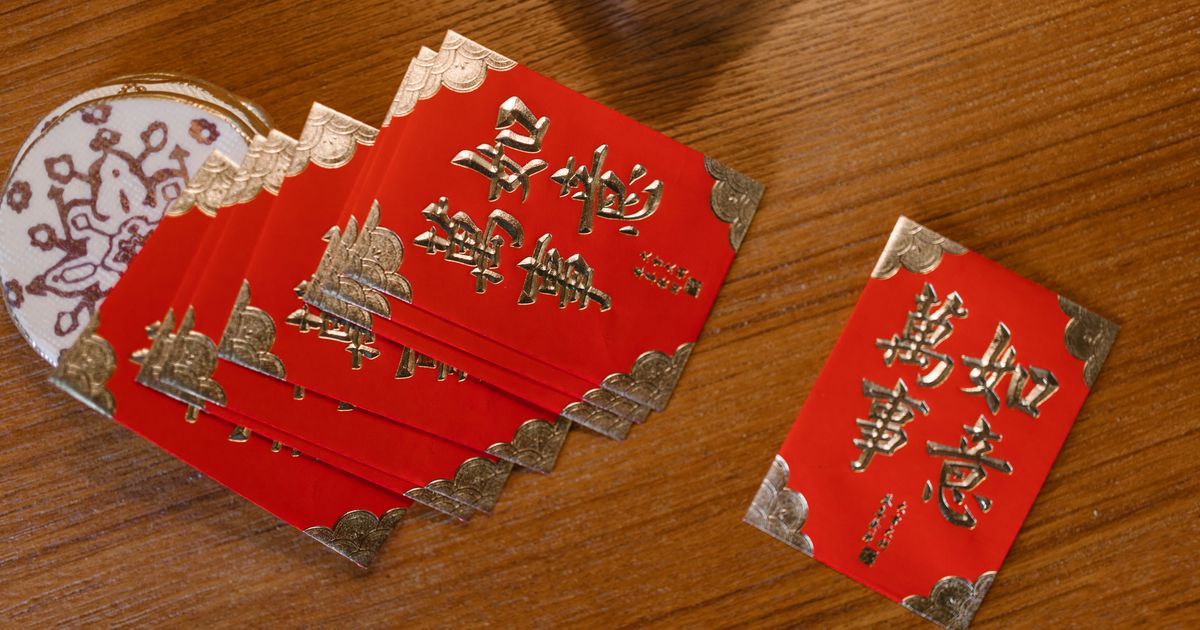
If there is one object that CNY marketing in Singapore is built around, it is the red packet. What goes inside it has been the subject of a sustained official campaign for several years, and brands are still producing creative that runs against it.
In a media release dated 19 January 2026, the Monetary Authority of Singapore said it strongly encourages the public to choose Fit notes or e-hong baos. Fit notes are used notes of a quality similar to those dispensed by an ATM. The figures MAS published are not small:
- In 2025, over 16 million pieces of Fit notes were exchanged at the banks — an increase of about 40% on the previous year.
- MAS puts the emissions saving at the equivalent of the annual carbon footprint from powering 280 four-room HDB flats.
- A MAS survey found 2 in 3 people were open to receiving Fit notes in their hong baos, saying the condition of the notes did not matter and that Fit notes were as meaningful as new ones.
For 2026, online pre-booking of notes at DBS, OCBC and UOB opened on 27 January, with collection, walk-in exchange and pop-up ATM dispensing from 3 February. Customers of those three banks — except those aged 60 and above, and persons with disabilities — needed an online pre-booking to exchange at a branch.
Three things a marketer should take from that.
Crisp-new-notes imagery is now slightly off-key. Two-thirds of the public say they do not mind used notes, and the central bank is actively campaigning against the single-use new note. A brand whose CNY creative fetishises pristine notes is not committing an offence; it is just visibly a year or two behind the conversation. Sustainability-adjacent CNY creative — reusable packets, digital gifting, Fit notes — now has official cover and a real statistic behind it.
The pre-booking window is a fixed, dateable demand spike. Note exchange opens roughly ten days before the holiday and the collection window opens a few days later. For anyone in banking, fintech, retail near bank branches, or any category where “while you are out running errands” is a real occasion, that is a knowable date to plan around rather than a vague pre-CNY blur. Expect the 2027 equivalents to sit roughly ten days and three days before 6 February respectively, and confirm them when the banks announce.
The anti-phishing line constrains your SMS. MAS’s release states that, to protect customers from phishing scams, banks will not send any SMS messages with clickable links. That norm does not bind a retailer, but it shapes the environment your message arrives in. In the exact weeks when consumers are being told that a link in a festive SMS about money is a scam signal, sending a promotional SMS with a shortened link and an urgent money-adjacent subject is a poor idea — both for deliverability and for the fraction of your list that reports it. Use a branded sender, avoid link shorteners, and lean on channels where the identity is verifiable. Our guide to email marketing in Singapore covers the equivalent deliverability considerations, and PDPA, marketing and tracking covers the consent side, including the Do Not Call rules that apply to phone numbers.
If you sell festive food, the rules are stricter than the season suggests
CNY is the biggest food-commerce season of the Singapore year, and it is also the season that generates the largest number of informal sellers — the group-buy for bak kwa, the pre-order for pineapple tarts, the friend-of-a-friend importing snacks. The Singapore Food Agency has published guidance that a lot of those operations have never read.
Group buys themselves do not need a licence, but importing does. SFA states that group buys are private arrangements among members of a group and do not require a licence — gathering a few friends to order from a licensed Singapore supplier at a better price is fine. But it is equally explicit that anyone who wants to import food for sale, whether to a group of members or to consumers beyond a private group, must apply for a licence or registration from SFA. It gives one example in terms: if you intend to import meat to sell to your network of friends, you will need a licence regardless of the quantity.
What you carry back is not stock. SFA’s rule on food brought in from overseas is that it is strictly for private consumption, and it states plainly that it is illegal to sell food brought back as part of a personal allowance to others, regardless of quantity — and, on its group-buy page, that travellers are not allowed to sell such food “whether to their friends or via online platforms”. A festive haul brought back from a trip and resold in a chat group is squarely inside that prohibition.
Handling duties attach to the organiser. SFA’s guidance asks organisers to buy from reputable sources, check packaging for damage before passing food on, and store it at the correct temperature — keeping frozen items frozen right up to handover. For a CNY group buy that often means a domestic freezer and a car boot doing work they were not designed for.
None of this is a reason for a legitimate brand to avoid the category. It is a reason to say so. If you are a licensed importer or working with one, that is a genuine, verifiable trust signal in a season crowded with informal sellers, and almost nobody uses it in their copy. Nutri-Grade rules also bite on festive drinks and their online menus — we cover those in full in social media for F&B in Singapore and Meta Ads for F&B, so they are not repeated here.
Working the 2027 calendar backwards
Counting back from Friday 5 February 2027, which is the eve and the real deadline for anything physical.
| When | What has to be done | Why this date |
|---|---|---|
| Sept–Oct 2026 | Product and hamper decisions; supplier and import arrangements; licence position confirmed if food is involved | Lead times on festive packaging and imported goods; licensing is not a January task |
| November 2026 | Creative production for both CNY and Hari Raya; KOL and talent booked | Only four and a half weeks separate the two events in 2027 |
| Early December 2026 | Site, checkout and delivery-slot capacity tested; measurement and tagging fixed | December’s own peak is the stress test; do not debug in January |
| Late December 2026 | Pre-order and early-bird opens | Captures intent before the year-end break, when the five-week window has not yet started |
| 2–16 January 2027 | Main gifting push; corporate gifting closes early | Corporate buyers decide first and cut off first |
| c. 27 January 2027 | Note pre-booking opens (2026 equivalent date; confirm when announced) | A dateable errand spike, not a vague pre-CNY blur |
| 18 Jan – 3 Feb 2027 | Last-order dates published and enforced; delivery-slot scarcity messaging | Deadline urgency is real here, unlike most of the year |
| Fri 5 Feb 2027 | Final delivery; switch to store-visit and dine-in messaging | The eve, with no weekday buffer behind it |
| Mon 8 Feb 2027 | Back-to-work messaging live | The Monday in lieu is conditional — a large share of the market is working |
What to measure, and what not to
Festive campaigns are the easiest place in the year to declare victory on the wrong number. Three rules.
Judge over a window, not on the day. A large share of CNY revenue is demand that would have arrived anyway, pulled into a five-week window. Compare the season against the same season last year, adjusting for the eleven-day shift, rather than against the preceding month.
Net of returns and discount. Gifting has a return and exchange profile that ordinary trading does not. Judge on margin. Our guide to ROAS versus ROI covers which measure answers which question, and vanity metrics covers what a festive campaign will otherwise be judged on.
Fix the tracking before December. You cannot repair attribution during a five-week season. See conversion tracking and UTM tagging, and the wider framework in our pillar guide to performance marketing in Singapore.
On the creative and channel side, building a social media content calendar covers how to schedule a compressed season, short-form video covers the format that carries most festive reach, and influencer and KOL marketing in Singapore covers the disclosure rules that apply when you pay or gift a creator — which matters more at CNY than at any other time of year, because gifting a hamper to a creator is a material connection whether or not money changes hands.
The summary
Chinese New Year 2027 is on Saturday 6 and Sunday 7 February. That is eleven days earlier than 2026, it compresses the January selling window from about six and a half weeks to five, it puts the final delivery deadline on a Friday afternoon, and it makes the Monday off conditional rather than universal. Hari Raya follows four and a half weeks later, so both campaigns have to be produced together.
Around those dates, two things have moved: the ang bao itself, where MAS’s Fit note and e-hong bao campaign now has a public majority behind it and a real number attached; and festive food selling, where SFA’s licensing line catches a great deal of informal CNY commerce that has never checked.
The work that decides how the season goes happens in the next three months, which is why this is a September article. If you want help planning it — the calendar, the channel mix, or the measurement that will tell you afterwards whether it worked — have a look at what we do and our client case studies. If F&B or retail is your category specifically, digital marketing for F&B in Singapore and e-commerce CRO are the closest starting points.
Frequently asked questions
When is Chinese New Year 2027 in Singapore?
Saturday 6 February and Sunday 7 February 2027, per the Ministry of Manpower’s published public holidays. MOM notes that Monday 8 February 2027 will be a public holiday if your rest day falls on 7 February 2027, which means the additional day off is conditional rather than universal. Chinese New Year’s eve, and therefore the reunion dinner and the last practical delivery date, falls on Friday 5 February 2027.
How does the 2027 date change my campaign compared with 2026?
It compresses it. Chinese New Year 2026 fell on 17 and 18 February; 2027 falls eleven days earlier. The window from New Year’s Day to the eve shrinks from about six and a half weeks to five, so a gifting programme has room for roughly one fewer send-and-remind cycle, and anything with a physical lead time has to start earlier. The holiday also falls on a weekend rather than midweek, so there is no weekday buffer behind the final delivery date.
When should I start planning Chinese New Year marketing?
For 2027, the fourth quarter of 2026. Sourcing, packaging and any food import licensing belong in September and October; creative production belongs in November, and it should cover Hari Raya Puasa on 10 March 2027 at the same time, because only about four and a half weeks separate the two. Site, checkout and measurement readiness should be settled in early December, before the year-end peak rather than during the season itself.
Is it still appropriate to build Chinese New Year creative around brand-new banknotes?
It is not prohibited, but it runs against a sustained official campaign. MAS strongly encourages the public to choose Fit notes, which are used notes of ATM-like quality, or e-hong baos. It reported that over 16 million pieces of Fit notes were exchanged in 2025, about 40 per cent more than the year before, with an emissions saving equivalent to the annual carbon footprint of powering 280 four-room HDB flats, and that a MAS survey found two in three people were open to receiving Fit notes. Creative that celebrates single-use new notes is out of step with where the public and the central bank now are.
Can I run a Chinese New Year group buy for imported snacks or bak kwa?
Only within limits. SFA states that group buys are private arrangements that do not require a licence — ordering in bulk from a licensed Singapore supplier is fine. But anyone importing food for sale, whether to a group of members or to consumers more widely, must apply for a licence or registration from SFA, and SFA gives the specific example that importing meat to sell to your network of friends requires a licence regardless of quantity. Food brought back from personal travel is for private consumption only and may not be sold, including via online platforms.
Should I send SMS promotions during the Chinese New Year period?
Be careful with the format. MAS has stated that, to protect customers from phishing scams, banks will not send SMS messages with clickable links during the notes-exchange period. That norm does not bind retailers, but it sets the context your message lands in: consumers are being actively told that a money-adjacent festive SMS containing a link is a scam signal. Use a recognisable branded sender, avoid link shorteners, and make sure your consent position under the PDPA is sound before the season starts.
Sources, all read 1 September 2026: Ministry of Manpower, “Public holidays” (2026 and 2027); MAS, “Choose Fit Notes or E-Hong Baos for a Greener Lunar New Year”, 19 January 2026; SFA, “Guidelines for Group-Buy Organisers”; SFA, “General Rule to Bring Food into Singapore (Non-commercial)”. Confirm 2027 note-exchange dates with the banks when announced.