
Last updated 22 October 2026 — by Adrian Tan, SDM. Marketing guidance, not legal advice. References are to the Guns, Explosives and Weapons Control Act 2021 and its subsidiary legislation, and the Corrosive and Explosive Substances and Offensive Weapons Act 1958, as shown on Singapore Statutes Online on 22 October 2026, read with the Police Regulatory Department’s published FAQ and item guideline. The Police guidance is guidance, not law; where we rely on it or infer how a rule applies, we say so.
A camping store adds a hunting knife to its Shopee shop. A cosplay seller lists a metal katana prop. A party supplier promotes sparklers for a year-end event. A self-defence brand runs Instagram ads for a pocket pepper spray. A collector sells a realistic replica pistol on Telegram.
Until mid-2025, these sellers dealt with a patchwork of older laws. Since 1 July 2025, they all answer to one statute: the Guns, Explosives and Weapons Control Act 2021 (GEWCA). It replaced the Arms and Explosives Act, the Dangerous Fireworks Act and the Explosive Substances Act, and it contains one provision that every online seller and marketer needs to understand: under GEWCA, advertising an item for sale is itself a form of supplying it.
This guide is for e-commerce sellers in outdoor and camping gear, kitchenware, toys and cosplay, archery and martial arts, self-defence and party supplies, and for the agencies that write their listings and run their ads. It explains the advertising rule, sorts the common products into what can and cannot be listed, covers the replica-gun import trap and the fireworks rules, sets out the penalties and platform policies, and works through six examples.
The rule that changes everything: advertising is supply
Section 7(1) of GEWCA defines “supply” very widely. Among other things, it includes:
- offering an item for sale;
- displaying or exhibiting it for sale;
- inviting offers to acquire it, “or otherwise advertising” it for sale, barter or exchange;
- offering it as a prize;
- offering or giving it away for the purpose of advertisement;
- negotiating a sale; and
- doing any of these as an agent or broker.
Section 7(2) then says a person “takes part in the supply” if they take, or cause to be taken, any step in it. The supply offences for guns (s 15), explosives (s 25) and weapons and noxious substances (s 32) apply whether or not the supply is made in the course of a business.
Read together, those provisions mean that the listing is the offence, not just the sale. A product page, a Carousell post, an Instagram ad, a giveaway and a “DM to order” story can each be a supply. And because “any step” counts, our reading is that an agency that writes and runs ads for an unlicensed item, or an influencer who promotes it, may also be taking part in the supply. That is a materially wider exposure than most marketers assume.
What GEWCA covers
The Act regulates four groups of items, and the boundaries between them decide what a seller can do.
- Guns. Section 3 is wider than most people expect. Its examples include airguns, paintball markers, stun guns and tasers, spear guns, starting pistols and ballistic knives. Section 3(4) excludes longbows, crossbows and slingshots, pepper-spray devices, and an imitation gun, meaning an object that substantially duplicates a gun in appearance. Replicas are therefore dealt with through import controls instead, covered below.
- Explosives. Under section 4, “explosive” includes a firework, a rocket firework and a sand cracker.
- Noxious substances. Section 2 defines these as any nauseating or lachrymatory substance, and expressly names a pepper spray gun or canister.
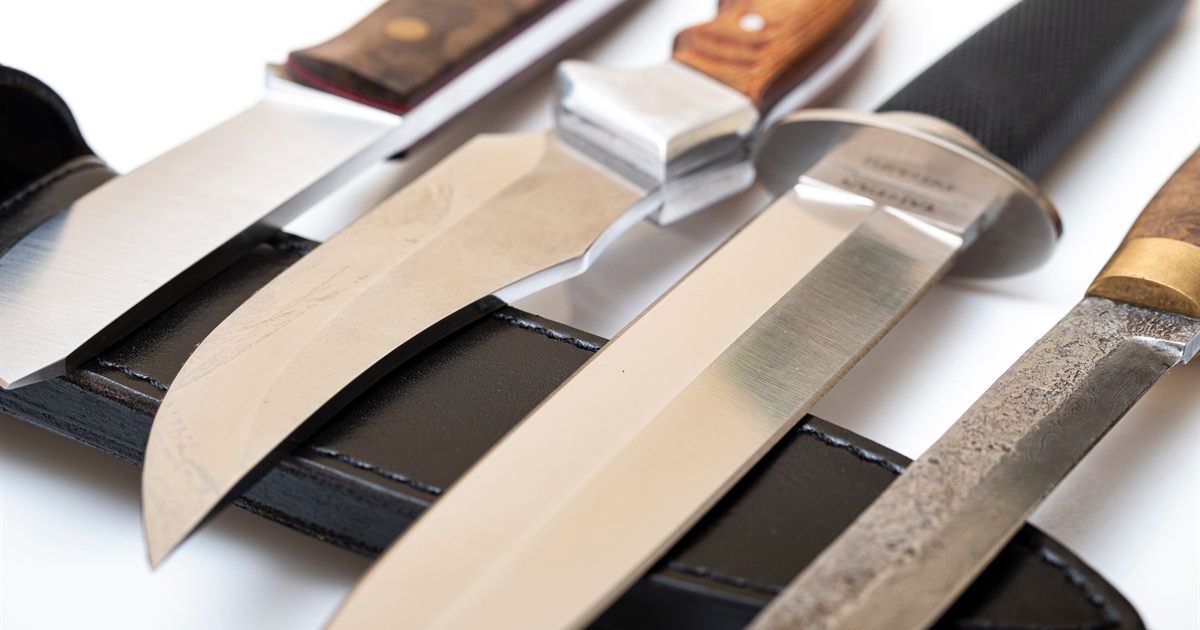
- Weapons. The First Schedule lists 24 kinds of weapon, including crossbows, bows of any draw weight, arrows, bayonets, swords (including machetes, parangs and kukris), daggers (including hunting knives, karambits and push daggers), butterfly and gravity knives, flick knives and switchblades, shuriken, knuckledusters (including weighted or studded gloves), spears, nunchaku, sai, axes and blowguns. Ordinary kitchen knives are not on the list.
Being on the First Schedule does not always mean a licence is needed. The PRD guideline sorts weapons into tiers, and treats some listed items, such as hunting, diving and survival knives, machetes, parangs and axes, as exempt “Type 3” items. That is why a hunting knife can appear both in the Schedule and on the exempt list below.
Can I list it? Product by product
The Police Regulatory Department (PRD) publishes a guideline sorting common items into categories, last updated 1 May 2026, and a FAQ for the regime. Two statements in the FAQ set the frame. For guns, noxious substances, explosives and explosive precursors, sale through online platforms “is prohibited”, covering retailers’ own websites as well as marketplaces. For weapons, online sale on platforms such as Shopee and Lazada is possible if the licensing conditions are met or the item is exempt. The FAQ also says that “online sale” includes listings and advertisements, pre-orders and direct messages.
| Product | Position for sale to individuals, per PRD guideline | What it means for online listings |
|---|---|---|
| Kitchen knives, manual folding knives, Swiss Army knives, toy plastic or wooden swords | Not regulated by GEWCA | Can be listed, subject to platform and ad policies |
| Machetes, parangs, axes, diving, hunting and survival knives | Exempt (“Type 3”) | Exempt from licensing, but several platforms ban them |
| Sporting bows and arrows, blunted swords, daggers, spears and bayonets | Type 2: covered by a class licence with conditions | Can be sold with age and authorisation checks, safety advisory and records |
| Flick and butterfly knives, karambits, knuckledusters, nunchaku | Not allowed for individuals | Do not list |
| Airsoft guns, tasers and stun guns | Not allowed for individuals; guns cannot be sold online | Do not list |
| Pepper spray | Not allowed for individuals; noxious substances cannot be sold online | Do not list |
| Fireworks and firecrackers | Not allowed, except small sparklers and party poppers covered below | Do not list, apart from those exceptions |
| Batons, handcuffs, body armour | Supply to government only | Do not list to the public |
| Slingshots and catapults, concealed weapons | Prohibited outright | Do not list |
| Toy and replica guns | Import approval needed; realistic replicas and cap guns refused | Only list stock lawfully imported with approval |
One footnote in the guideline catches many sellers: for items such as flick knives, whether the blade is sharp or blunt “is immaterial”. A blunt butterfly-knife “trainer” sold for flipping practice is still the regulated item.
The Type 2 class licence: bows, blunted blades and props
For sporting bows (draw weight up to 27.215 kg), World Archery-standard arrows and blunted swords, daggers, spears and bayonets, the Type 2 class licence (S 366/2025) automatically licenses any supplier without an application. The licence comes with conditions that shape the checkout and the marketing:
- no sale to anyone under 18, with proof of age checked;
- proof of the buyer’s authorisation checked;
- the PRD safety advisory handed to the buyer; and
- sales records kept for three years.
For an online archery or cosplay-prop store, that means an age-gate and verification step at checkout, a document upload or verification flow, a safety advisory sent with every order, and order data retained for three years. Marketing copy should not suggest a blunted prop can be sharpened or used as a weapon. If you are building that flow, our guide to e-commerce marketing in Singapore covers checkout design more broadly.
Replica and toy guns: the import trap
Because an imitation gun is not a “gun” under section 3(4), replicas are controlled at the border instead. Toy and replica guns need import approval under the Regulation of Imports and Exports Regulations, applied for through TradeNet. The PRD guideline says realistic replicas and cap guns are refused, and that “personal collection” or “self-defence” are not accepted as legitimate purposes.
The enforcement example that matters to online sellers is a replica-gun case. On 5 March 2025 the Police announced that a man would be charged for importing 154 replica guns that were sold through an e-commerce platform, an offence carrying a fine of up to $100,000 or three times the value of the goods, or up to two years’ jail, for a first offence. Press reports later said he was fined $60,000 and had sold through Carousell and Telegram after sourcing from overseas sites. For sellers, the lesson is that a cheap replica bought from a cross-border marketplace becomes an import offence the moment it is brought in for resale.
Gel blasters and similar toys sit close to the line. Carousell, for example, allows “toy guns e.g. Nerf Gun” but bans airsoft, BB and paintball guns and “imitation firearms”. Before listing anything gun-shaped, check whether it was imported with approval and whether it looks realistic.
Fireworks: only the smallest items
Fireworks are explosives under GEWCA, and the PRD position is that individuals may not buy fireworks or firecrackers. Two narrow exceptions matter for party and event sellers:
- A class licence for lower-risk explosives (S 378/2025) lets anyone import and supply sparklers up to 400 mm long containing no more than 3% potassium perchlorate, with extra storage conditions once stock exceeds 5 kg of explosive mass.
- The PRD guideline treats party poppers and Christmas crackers with under 20 mg of explosive as exempt.
Everything else, from “pop-pop” snaps to fountains and firecrackers, should not be listed or advertised. That matters for festive campaigns: a Chinese New Year or Deepavali promotion that features firecrackers, even as a giveaway, is offering an explosive as a prize or for advertisement under section 7(1). Our guides to lucky draw and giveaway rules and event marketing rules in Singapore cover the other approvals festive campaigns need.
Penalties
| Offence | Individual | Company |
|---|---|---|
| Supplying a prohibited weapon (s 34) | Up to 36 months’ jail and a fine of up to $40,000 | Fine up to $80,000 |
| Supplying other weapons or noxious substances, such as pepper spray (s 34) | Up to 24 months’ jail and a fine of up to $20,000 | Fine up to $40,000 |
| Supplying a non-prohibited gun, such as an airgun (s 17) | Up to 36 months’ jail, plus a fine of up to $5,000 per gun (capped at $50,000) or up to $50,000 | Fine up to $100,000 |
| Supplying a prohibited gun (s 17) | Up to 5 years’ jail and a fine of up to $100,000 | Fine up to $200,000 |
| Supplying explosives, such as fireworks (s 27) | Up to 36 months’ jail and a fine of up to $50,000 | Fine up to $100,000 |
The older Corrosive and Explosive Substances and Offensive Weapons Act still applies alongside GEWCA. Its section 7 makes it an offence to sell, offer or expose for sale or hire, or lend, a scheduled weapon otherwise than for a lawful purpose, with imprisonment and liability to caning. “Scheduled weapon” now refers to the GEWCA First Schedule.
What the platforms allow
Platform rules are often stricter than the law, and they are enforced faster.
- Carousell bans machetes, kukris, hunting knives, flick knives, karambits, airsoft, BB and paintball guns, imitation firearms, batons, tasers, bows, slingshots and fireworks including “pop-pop”. It allows kitchen, utility, pen and springless Swiss knives, fencing swords and toy guns such as Nerf.
- Shopee Singapore‘s prohibited-items policy (updated 16 July 2026) bans firearms, weapons “such as pepper spray, stun guns”, replicas of them, and all fireworks and firecrackers.
- Meta‘s ad standards ban ads for pepper spray, tasers, batons, nunchaku, non-culinary knives, BB and paintball guns and fireworks, while allowing toy guns and swords.
- Google Ads bans ads for knives promoted for injuring an opponent, assisted-opening knives and explosives.
The PRD’s FAQ for e-commerce platforms adds that it expects platforms to use keyword and image filtering and to verify sellers’ licences, and that enforcement can reach overseas sellers whose listings target Singapore consumers.
Six worked examples
1. The camping store and the hunting knife
An outdoor store lists a fixed-blade hunting knife on its own site and on Carousell. The PRD guideline treats hunting knives as exempt “Type 3” items, so the law does not require a licence, but Carousell bans hunting knives and Meta bans ads for non-culinary knives. The store can sell from its own site, describing the knife for camping and bushcraft, and should not run paid social ads for it.
2. The self-defence brand with pepper spray
A brand plans Instagram ads for a keychain pepper spray. Pepper spray is a noxious substance, individuals may not have it, and the Police say noxious substances cannot be sold online at all. The listing, the ads and any influencer posts are all forms of supply. Drop the product; a personal alarm is the usual lawful alternative.
3. The cosplay seller and the katana
A cosplay shop wants to sell a metal katana prop. A sharp sword is a First Schedule weapon. A blunted sword can be supplied under the Type 2 class licence, so the shop can list blunted props if it checks age and authorisation, hands over the safety advisory and keeps records for three years, and it should say clearly in the listing that the blade is blunted.
4. The party supplier’s festive promotion
A party supplier plans a Chinese New Year bundle with “pop-pop” snaps and sparklers. Sparklers up to 400 mm within the class licence limits are fine; the snaps are fireworks and cannot be listed or given away. Rebuild the bundle around sparklers, party poppers under the exempt limit and decorations.
5. The collector reselling replica pistols
A hobbyist imports realistic replica pistols from an overseas marketplace and resells them on Telegram. Realistic replicas are refused import approval, so the stock should never have come in, and the March 2025 case shows how this ends. The only safe position is not to source or list realistic replicas.
6. The agency asked to run airsoft ads
An agency is asked to run Google and Meta ads for an airsoft retailer. Airsoft guns are not allowed for individuals, guns cannot be sold online, and both ad platforms ban the category. On our reading of section 7(2), the agency would be taking a step in the supply. Decline the brief.
A pre-listing checklist
- Classify each product: gun, explosive, noxious substance, First Schedule weapon, or unregulated.
- For guns, explosives and noxious substances, do not list online at all, except sparklers and party poppers within the limits above.
- For Type 2 items, build age, authorisation, safety advisory and three-year record-keeping into checkout.
- For anything gun-shaped, confirm import approval and that it is not a realistic replica.
- Remember that giveaways, prizes and bundles count as supply.
- Check the platform’s prohibited list and ad policy before publishing or paying for reach.
- Describe products accurately; our guide to the Trade Descriptions Act covers product claims.
Other categories of e-commerce products carry their own licensing rules. See our guides to selling telecom devices online and selling wildlife products online.
Where this leaves you
Since 1 July 2025, GEWCA has made the listing, the ad and the giveaway part of the regulated act. For most kitchenware, utility knives and toys, nothing changes. For guns, airguns, tasers, pepper spray and fireworks, online selling is effectively closed. In between, blunted props, bows and outdoor knives can be sold with the right checks, but platforms may still refuse them.
If you run an online store in a category like this and want a site and product pages that convert without crossing the line, our web design and e-commerce team in Singapore can help, and you can see how we work in our client case studies. For the bigger picture, start with our complete guide to web design in Singapore.
Fire alarms, extinguishers, fire doors and digital locksets are regulated under a separate certification regime. Our guide to selling and advertising fire safety products in Singapore explains which products need a certificate and why “SCDF-approved” is a false claim.
Frequently asked questions
Is it legal to sell knives online in Singapore?
Kitchen knives, manual folding knives and Swiss Army knives are not regulated by the weapons law. Hunting, diving and survival knives are exempt, though several platforms ban them. Flick knives, butterfly knives and karambits are not allowed for individuals and should not be listed.
Does advertising a weapon count as selling it?
Yes. Section 7 of the Guns, Explosives and Weapons Control Act 2021 defines supply to include offering, displaying and advertising for sale, offering as a prize and giving away for advertisement, and anyone who takes any step in the supply takes part in it.
Can I sell pepper spray in Singapore?
No. Pepper spray is a noxious substance under the Act, individuals are not allowed to have it, and the Police say noxious substances cannot be sold through online platforms.
Are airsoft and replica guns legal to sell?
Airsoft guns are not allowed for individuals. Replica and toy guns need import approval, and the Police say realistic replicas and cap guns are refused. A man was charged in 2025 for importing 154 replica guns that were sold online.
Can I sell sparklers or fireworks for a festive promotion?
Sparklers up to 400 mm with no more than 3% potassium perchlorate can be supplied under a class licence, and small party poppers are exempt. Other fireworks and firecrackers cannot be sold, given away or advertised.
Can I sell cosplay swords?
Blunted swords can be supplied under the Type 2 class licence if you check the buyer is 18 or over, check their authorisation, hand over the Police safety advisory and keep records for three years. Sharp swords are First Schedule weapons. Toy plastic or wooden swords are not regulated.