Last updated 14 November 2026 — by Adrian Tan, SDM. Marketing guidance, not legal advice. References are to legislation on Singapore Statutes Online and MHA, GRA and SPF pages as read on 14 November 2026. The mystery-box class licence conditions had not been published on that date; we will update this guide when they are. Where we interpret how a rule applies, we say so.
Collectible blind boxes have drawn queues outside Singapore malls, trading card packs sell out within minutes of release, claw-machine shops have spread through heartland malls, and “mystery box” bundles are a staple of e-commerce flash sales. Each of these products sells the same thing as well as the item inside: the chance of getting something better than what you paid for.
That chance is exactly what Singapore’s gambling law is built around. Under the Gambling Control Act 2022, paying for a chance at a prize can be a lottery, and the Ministry of Home Affairs (MHA) has said since 2022 that mystery boxes will be brought under a class licence with conditions. Through 2026, ministers told Parliament four times that the blind-box rules were being drafted. Claw machines and arcade games, meanwhile, have been subject to hard prize limits since 1 March 2024.
This guide is for retailers, e-commerce sellers, mall and event operators, and the marketers who promote them. It explains what applies today, what is coming, and how to market chance-based products without stepping into gambling or misleading consumers.
The short version
- A paid blind box can fall within the legal definition of a lottery: you pay, and what you get depends on chance. The Act expressly covers paying for goods at a price that reflects the chance.
- The specific class licence for mystery boxes has not been published yet. GRA’s website lists mystery boxes as a class-licensed product with conditions “to be provided at a later date”. MHA said in May 2026 that details, which will also cover trading cards, would come later in the year.
- MHA does not plan to ban blind boxes or force sellers to open sealed boxes. It has said odds disclosure, age limits and rarity distributions are under consideration.
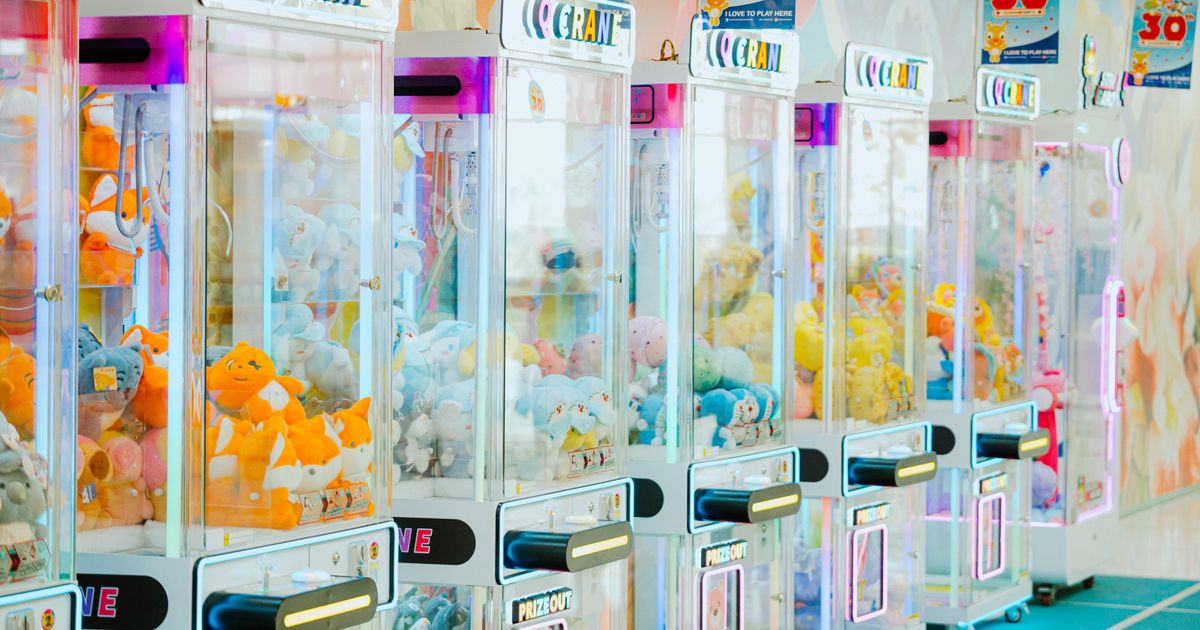
- Claw machines and arcade games are already regulated. Prizes must be worth under $100 and cannot be cash, vouchers or credit, and operators cannot buy prizes back.
- Consumer protection applies now. Claims about rare items, odds or limited stock must be true under the Consumer Protection (Fair Trading) Act.
- Do not market chance to children. The advertising code bars exploiting children’s credulity, and inducing a minor to gamble is a strict-liability offence.
Why a paid blind box can be a lottery
Section 9(1) of the Gambling Control Act 2022 (GCA) defines a lottery as a scheme for distributing prizes in which people pay, or otherwise qualify, to take part, and the distribution depends at any stage on chance. It expressly includes lucky draws, raffles and sweepstakes. Three further details matter for blind boxes:
- Section 9(2) treats paying for goods at a price that reflects the opportunity to take part as paying to participate. A blind box whose price is set partly by the chance of a rare figure fits that description, in our reading.
- Section 9(3)(c) allows the outcome to be decided by “envelope or device”, so a sealed box is no obstacle.
- Section 7(6) defines a game of chance to include games mixing chance and skill, and games presented as involving chance.
Conducting a lottery without a licence or class licence is a serious offence. Under section 18, the maximum is a fine of $500,000 and 7 years’ imprisonment for the higher tier, rising to $700,000 and 10 years for repeat offenders. Section 34 separately makes it an offence, of strict liability, to send an inducement to gamble to someone underage, with a maximum of $300,000 and 6 years.
Does that mean every blind box sold today is an unlicensed lottery? No official source says so, and media reports conflict, with some describing mystery boxes as already regulated and others as not yet permitted. MHA’s own consistent position is that mystery boxes will operate under a GRA class licence with conditions, and the absence of those conditions so far has not been accompanied by any enforcement we could find against retailers. What is clear is the direction: sellers should treat blind boxes as a gambling-adjacent product and get ready for conditions, rather than assume they sit outside the law.
There is precedent for enforcement against cruder versions. In August 2018, according to media reports at the time, police declared mystery prize vending machines, where buyers paid for a random prize of varying value, a form of public lottery under the law then in force, and the machines were removed.
How the mystery-box rules have developed
The story so far, from the primary sources:
- July 2021. MHA’s consultation on the gambling law review proposed a prize cap of $100 for mystery boxes, arcade games and claw machines. A 2020 survey found about 70% of respondents agreed with $100 for mystery boxes, and about 90% of those who disagreed wanted a lower cap.
- February and March 2022. On the Bill’s first reading, MHA said it would impose a class licence for mystery boxes sold by retailers, including capping the retail value of prizes at $100. At the second reading, the minister named mystery boxes and loot boxes as emerging trends and said GRA would impose conditions on class-licensed products such as mystery boxes, with details in subsidiary legislation.
- The GRA website lists “Mystery Boxes” among class-licensed products, described as items sold to customers that contain unknown items, and says the conditions will be provided at a later date.
- 12 February 2026. The Minister for Home Affairs said MHA and GRA had decided to introduce regulations setting conditions for blind boxes, that they were being drafted, and that standardised disclosure of odds would be among the points considered.
- 2 March and 7 April 2026. Replies said details would come around mid-2026, that age restrictions, probability disclosure and minimum guaranteed rarity distributions might be considered later, and that safeguards must be proportionate.
- 7 May 2026. MHA said details, which would also cover trading card games, would come later in the year after industry consultation, and that it would not require sellers to open sealed boxes because that would effectively ban blind boxes.
Whether the $100 retail-value cap announced in 2022 will be part of the final conditions is not confirmed. No legal instrument we could find imposes it on mystery boxes today, so do not tell customers it applies.
What the coming conditions are likely to touch
We do not know the final text, and it would be wrong to present proposals as rules. But MHA’s replies point to the areas a seller should prepare for:
| Area MHA has named | What it could mean for sellers | Prepare now by |
|---|---|---|
| Odds or probability disclosure | Publishing the chance of each item or rarity tier | Keeping accurate production ratios for every series |
| Age-based restrictions | Minimum purchase ages, with checks online | Reviewing whether ads and stores target under-18s |
| Minimum guaranteed rarity distributions | Rules on how rare the rarest item may be | Avoiding extreme “1 in 1,000” chase designs |
| Trading card packs | The same framework for sealed card packs | Card retailers treating packs like blind boxes |
| Not opening sealed boxes | Blind boxes stay legal as a format | No action; MHA has ruled this out |
Commentators have also floated resale restrictions and caps on the gap between common and rare item values. We found no official statement on either, so treat them as speculation.
What is already covered elsewhere: loot boxes and lucky draws
Two neighbouring products are already regulated, and it helps to keep them distinct. In-game loot boxes and gacha mechanics are covered by GRA’s class licence for online games with gambling elements, including a ban on cashing out; our guide to video game advertising rules explains it. Business promotion lucky draws, where customers enter a draw free or on the back of a normal purchase, have their own class licence; see our guide to lucky draw rules in Singapore. A blind box is different from both: the customer pays specifically for a sealed product whose content is random. And if you advertise anything that is gambling, the advertising offence in section 85 of the Act applies, which our gambling advertising guide covers.
Claw machines and arcade prizes: the rules in force
Unlike blind boxes, prize machines have a complete, enforceable regime built from two laws.
The Gambling Control Act carve-out
The GCA defines an “amusement machine” as a coin- or credit-operated game in which a single successful play wins nothing, a free replay, or anything of value less than $100, and it names claw machines and crane machines expressly. Amusement machines are excluded from the definition of a gaming machine. A machine that offers a prize worth $100 or more, or money, falls outside the carve-out and towards gambling.
The Public Entertainments Act licence
Under the Public Entertainments Act 1958, a machine that gives chances of obtaining prizes in money or kind in a public place is a public entertainment, as is an amusement centre, and needs a licence. Operating without one carries a fine of up to $20,000, and breaching a licence condition up to $10,000. The Singapore Police Force licenses amusement centres and amusement machines, with fun fairs complying through an exemption order.
Since 1 March 2024, the licence conditions in the Public Entertainments (Demerit Points) Rules 2017 have banned “restricted prizes”. A restricted prize is one valued at $100 or more, or one that is or includes money, a money equivalent, credit, or a merchant voucher, including QR-code vouchers. Operators may not give restricted prizes or let players exchange prizes for them. Tokens that can only be exchanged for non-restricted goods are allowed. MHA’s announcement also made clear that operators may not buy prizes back from players.
Other conditions affect marketing directly. In an amusement centre, children under 16 may not play on school days except between 6.30pm and 11.59pm, and students in school uniform or a school T-shirt may not play at all. Crane and game machines outside amusement centres, such as in malls or shops, carry the same prize ban and the same school-uniform rule. A breach of these conditions costs 6 demerit points, with suspension of the licence from 21 points and cancellation from 24. MHA warned in 2024 that offering restricted prizes could also lead to Gambling Control Act liability, up to $500,000 and 7 years.
For marketers, that means: no “win an iPhone” or “win $200 cash” claw-machine promotions, no “win a $50 shopping voucher” prizes, no “we’ll buy back your prizes”, and no campaigns aimed at students during school hours.
Marketing claims: the consumer protection layer that applies now
Whatever the final class licence says, the Consumer Protection (Fair Trading) Act already governs how you describe chance-based products. Section 4 makes it an unfair practice to do or say anything that might reasonably mislead a consumer, to make a false claim, or to do anything listed in the Act’s Second Schedule. The listed practices most relevant here are:
- Item 1: claiming goods have qualities they do not have.
- Item 4: claiming goods are of a particular standard or grade when they are not. “Guaranteed rare in every box” must be true.
- Item 7: false claims about availability or quantity. “Only 50 secret figures produced” needs a real production number.
- Item 19: failing to provide a prize or gift as offered.
- Item 23: omitting or hiding a material fact, or using small print. Odds buried in terms and conditions can mislead.
The Singapore Code of Advertising Practice adds standards on top. Advertisements must not mislead by inaccuracy, ambiguity, exaggeration or omission (clause 5.1), and must not exploit the natural credulity of children (clause 8.1). Its children’s appendix says ads must not exploit children’s credulity or lack of experience, must not make them feel inferior for not buying, must not encourage pester power, and must not encourage excessive purchases in order to take part. Collect-them-all campaigns aimed at young audiences sit uncomfortably with those principles, in our reading.
Selling online adds platform rules. TikTok Shop’s Singapore policy on surprise-based products, updated May 2026, bans seller-assembled random bundles, caps total value, requires buyers to be 18 or over, and limits how many transactions younger adult buyers can make in a day. Our guide to livestream selling rules covers “box break” lives and other surprise-product sessions in more detail.
Worked example: a blind-box launch and a mall claw-machine promotion
A toy retailer is launching a new collectible series of 12 figures plus one “secret” figure, and a mall wants a claw-machine zone for the school holidays. Here is how each element of the plan stands.
| Plan element | Issue | What to do |
|---|---|---|
| “1 in 144 chance of the secret figure” | Must match actual production ratios (CPFTA s 4, Sch 2 items 1, 4) | Publish only the real ratio and keep the factory data |
| “Limited edition, only 100 secrets made” | Availability claim (item 7) | State a number only if it is the true worldwide or local figure |
| Resale buy-back counter for secret figures | Turns chance into cash value; likely to draw regulatory attention | Drop it until the class licence conditions are known |
| TikTok ads targeting 13-17-year-olds | SCAP children’s appendix; likely future age limits | Target adults; avoid pester-power creative |
| Claw-machine top prize: a $150 gaming console | Restricted prize ($100 or more) | Use prizes under $100 in value |
| “Win $20 mall vouchers” at the claw machines | Merchant vouchers are restricted prizes | Offer goods instead of vouchers |
| School-holiday promotion “for students” | No students in school uniform may play | Promote to families; brief staff on the uniform rule |
A compliance checklist for sellers
- Treat blind boxes, mystery boxes and trading card packs as a gambling-adjacent product and watch GRA’s class licences page and the MHA newsroom for the conditions.
- Keep accurate production ratios and rarity data for every series, ready to disclose.
- Make every odds, rarity and quantity claim true and verifiable; do not hide odds in small print.
- Do not offer cash buy-backs, cash prizes or vouchers linked to box contents.
- Target adult audiences; avoid creative that exploits children or encourages excessive buying.
- For claw and arcade machines, hold the right Public Entertainments licence, keep every prize under $100, offer no cash, credit or merchant vouchers, and do not buy prizes back.
- Brief staff on the under-16 school-day hours and the school-uniform rule.
- For online sales, check the platform’s surprise-product policy before listing.
The bottom line
Chance-based products are legal to sell in Singapore, and MHA has said it does not intend to ban blind boxes. But they sit right at the edge of the gambling law, and the rules are tightening. Claw machines and arcades already face a hard $100 prize ceiling and a ban on cash and vouchers. Blind boxes and trading cards are about to get their own class licence conditions, with odds disclosure and age limits among the options on the table. The sellers who will adjust most easily are the ones who already make only true claims about odds and rarity, keep cash out of the prize chain, and market to adults.
If you need help planning a product launch or promotion that sells without crossing these lines, our performance marketing team in Singapore can help, and you can see results we have delivered in our client case studies. For the wider picture, read our complete guide to performance marketing in Singapore, our guide to dark patterns and urgency claims, our guide to event marketing rules for pop-ups and mall activations, and our overview of digital marketing for e-commerce.
Frequently asked questions
Are blind boxes legal in Singapore?
Yes, they are sold widely, and MHA has said it will not require sellers to open sealed boxes because that would effectively ban them. But paying for a chance at a prize can fall within the Gambling Control Act’s definition of a lottery, and MHA and GRA are drafting class licence conditions for blind boxes and trading card packs.
When will the blind box rules take effect?
No date has been announced. MHA said in May 2026 that details, covering trading card games too, would come later in the year. As of 14 November 2026, GRA’s class licences page still said mystery-box conditions would be provided at a later date.
Is there a $100 limit on mystery box prizes?
MHA proposed a $100 retail-value cap for mystery boxes in 2021 and 2022, but no legal instrument we could find applies it to mystery boxes today. The $100 limit that is in force applies to claw machines, arcade games and fun fairs.
What prizes can a claw machine offer in Singapore?
Prizes must be worth less than $100 and cannot be or include cash, credit, a money equivalent or a merchant voucher, including QR-code vouchers. Operators cannot buy prizes back. These rules have applied to amusement centres, fun fairs and crane machines since 1 March 2024.
Do I have to disclose the odds of getting a rare item?
There is no specific disclosure duty yet, though MHA has said odds disclosure is among the points being considered. Any odds or rarity claim you do make must be accurate under the Consumer Protection (Fair Trading) Act, and hiding material information in small print can itself be an unfair practice.
Can I market blind boxes to teenagers?
It is risky. The Singapore Code of Advertising Practice bars ads that exploit children’s credulity or encourage excessive purchases to take part, MHA is considering age-based restrictions, and TikTok Shop already requires buyers of surprise products to be 18 or over. Target adult collectors instead.