Last updated 5 October 2026 — by Adrian Tan, SDM. Marketing guidance, not legal advice. IMDA administers the rules below; check its current requirements for your specific products before you list them.
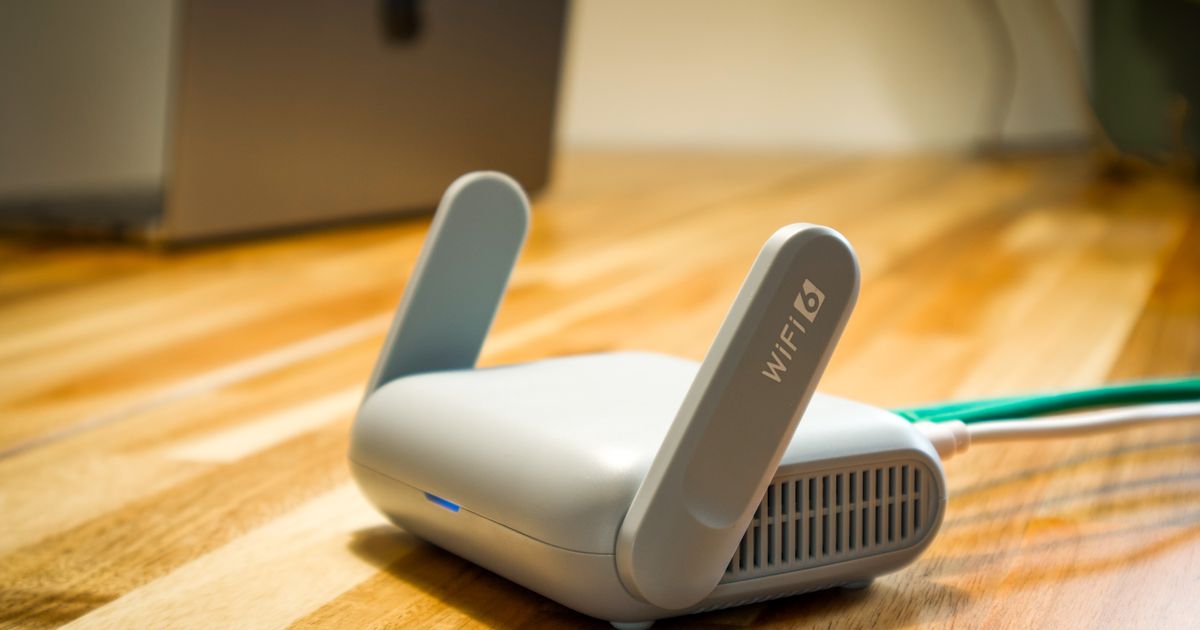
Bluetooth earbuds, smart plugs, Wi-Fi cameras, travel routers, walkie-talkies, car key finders: a surprising share of what Singapore e-commerce sellers list online is “telecommunication equipment” in the legal sense. Anything that transmits by radio or connects to a network falls under the Telecommunications Act, and the Act makes it an offence to offer it for sale without a licence. A Shopee listing, an Instagram shop post or a Facebook Marketplace ad is an offer for sale.
Most sellers who get this right do so by accident, because the brands they resell have already registered the products. The sellers who get caught out are importers of grey-market or direct-from-factory stock, and anyone selling “mobile signal boosters”. This guide explains who counts as a dealer, the two licence types, product registration, the rules that reach your ads and labels directly, the devices you cannot sell at all, and what IMDA’s enforcement record shows.
Listing a router online makes you a “dealer”
Section 54(1)(a) of the Telecommunications Act 1999 says a person must not “offer for sale, sell or possess for sale any telecommunication equipment” except under a licence. There is no specific penalty for this offence, so the Act’s general penalty in section 85 applies: a fine of up to $10,000, imprisonment of up to three years, or both, plus up to $1,000 a day for a continuing offence and forfeiture of the equipment.
The Telecommunications (Dealers) Regulations define a “dealer” in regulation 2 as anyone who manufactures, imports for sale, lets for hire, sells, “or offers or possesses for sale” telecommunication equipment — including employees. There is no small-seller exemption, and nothing that limits the definition to physical shops.
In marketing terms, three things follow:
- The listing is the regulated act. You do not need to have sold anything; offering is enough.
- Possession for sale counts. Stock held in a warehouse or at home for an online store is “possessed for sale”.
- Agencies are rarely the dealer, but the seller is. An agency building a store does not become a dealer, but the client whose store it is needs a licence before launch.
Class licence or individual licence: the $50 and $250 split
The Regulations create two licences, and which one you need depends on whether the equipment you sell is registered with IMDA.
| Dealer’s Class Licence | Dealer’s Individual Licence | |
|---|---|---|
| Who it suits | Retailers and e-commerce sellers of registered equipment | Importers, wholesalers, and anyone dealing in unregistered equipment |
| Basis | Deemed granted (reg 3); each premises must be registered | Applied for (reg 4) |
| Fee | $50 (reg 10(2)) | $250 for five years; renewal $250 (regs 9 and 10) |
| Can sell unregistered equipment? | No | Yes, but not for local use unless registered |
The practical rule for most online sellers: if every product you sell is already registered with IMDA, the class licence route is open to you. If you import products and register them yourself, or sell anything not yet registered, you need the individual licence.
Licence breaches carry their own sanctions on top of criminal offences. Under section 10(1)(f) of the Act, IMDA can impose a financial penalty of up to the higher of 10% of the relevant annual turnover or $1 million, and it can also issue compliance orders or suspend or cancel a licence. Prescribed offences can be compounded for up to $5,000 under section 84.
Register before you list
Regulation 20(1) says a licensee may not sell network-connected equipment, or radio equipment for use in Singapore, unless the equipment type is “approved for sale by way of registration”. Registration lasts five years (reg 20(6)) and costs $50 to renew (reg 20(7)). The Fourth Schedule sets the initial fees: $350 for radio or single-line equipment evaluated by IMDA, $500 for complex or multi-line equipment, and $100 where a recognised certification body has done the evaluation.
IMDA’s equipment registration guide sorts products into three schemes, all based on a supplier’s declaration of conformity:
| Scheme | Typical products | What IMDA does |
|---|---|---|
| Enhanced Simplified Equipment Registration (ESER) | Short-range, low-power devices such as many Bluetooth and Wi-Fi gadgets; complex multi-line equipment | Registers without evaluating first |
| Simplified Equipment Registration (SER) | 3G, LTE and 5G mobile phones and other terminals; broadband modems | Verifies within 3 or 10 working days |
| General Equipment Registration (GER) | Land-mobile radio such as walkie-talkies; cellular base stations; ultra-wideband; wireless broadband | Mandatory full route |
Two details matter for product pages. The unit you sell must match the registered model, and any modification needs re-registration. A “Pro” variant with a different radio module, or a regional version with a different band plan, is not covered by the registration of the base model. Check each SKU, not just the brand.
The rules that reach your ads and labels
Unusually for a licensing statute, the Dealers Regulations deal with advertising directly. Paragraph 8 of the Second Schedule sets out duties for licensed dealers:
- Para 8(a): affix IMDA’s labels to equipment before it “is displayed or offered for sale”.
- Para 8(c): ensure that “every advertisement, pamphlet or brochure” contains the information IMDA specifies.
- Para 8(d): do not put a compliance label on unregistered equipment, or on its advertisements or packaging.
Paragraph 9 adds that a dealer must tell buyers if a licence is needed to use the equipment — relevant for some radio equipment, where the buyer’s use rather than the sale is what needs a licence.
The details sit in IMDA’s Requirements for Telecommunication Equipment Labels and Advertisements (version 3, October 2020). The standard label reads “Complies with IMDA Standards” with the dealer’s registration number (in the form DB123456), sized 17 mm by 9 mm. Electronic labelling on the device’s screen is allowed where the packaging includes an instruction leaflet. Residential gateways must also carry the Cyber Security Agency’s Cybersecurity Label. A breach of the publication is treated as a breach of the dealer’s licence.
“For Export Only”: the ad rule IMDA has actually enforced
IMDA publishes a register of enforcement decisions under the Telecommunications Act. Among them are a financial penalty in March 2015 and warnings in 2015, 2018 and 2019 for “Failure to include the words ‘For Export Only’ in Advertisement”. Dealers with an individual licence may hold unregistered equipment for export, but the advertisement has to make clear it is not for use in Singapore.
For marketplace sellers, the lesson is concrete. If any listing is for an unregistered model, the words “For Export Only” belong in the listing itself — title or first line of description, not buried in a policy page — and the IMDA label must not appear anywhere on the product photos, packaging shots or graphics.
Do not borrow a label
Para 8(d) is easy to breach without intending to. Product photos supplied by a factory for a “global” version often show a compliance label from another market’s model, or an IMDA label from a different registered variant. Using that photo on an unregistered model puts a compliance label on its advertisement. Shoot your own photos of the actual unit, or check that the supplier’s images match the registered model.
Devices you cannot sell at all
The Third Schedule to the Dealers Regulations lists prohibited equipment:
- scanning receivers;
- military communication equipment;
- telephone voice changers;
- radio equipment operating in 880–915, 925–960, 1900–1980 and 2110–2170 MHz, except cellular phones or equipment IMDA has approved; and
- jamming devices, in any frequency band.
Regulation 11 and paragraph 7 of the Second Schedule bar licensed dealers from manufacturing, importing, hiring out, selling, or offering or possessing these for sale. Importing them needs IMDA’s prior approval (reg 18(2)). IMDA’s enforcement register records a financial penalty in August 2015 for “Offering for sale Telecommunication Equipment which is classified as Prohibited Equipment”, and a financial penalty in June 2024 under the class licence condition on prohibited or non-compliant equipment.
The frequency list is what catches mobile signal boosters. Those bands are mobile-network bands, so a consumer repeater that transmits in them is prohibited equipment unless IMDA has approved it. Marketing copy that promises “boost your 4G signal at home” for a device working in those bands is advertising a product that cannot lawfully be offered for sale in Singapore. Jammers are banned in every band, which also covers “GPS blockers” and “phone signal blockers” sometimes sold as privacy gadgets.
Class licensees are also barred from possessing for sale interception devices (Second Schedule para 4) and devices that clone IMEI numbers or SIM cards (para 5).
Phones after the 3G shutdown
Singapore’s 3G networks closed on 31 July 2024, announced on 26 July 2023. IMDA’s notices set the timeline that still governs phone listings:
| Date | Change |
|---|---|
| 26 July 2023 | Sellers must tell buyers that 3G networks will end |
| 1 November 2023 | No new registrations or renewals for 3G-only or non-VoLTE phones |
| 1 February 2024 | Those models de-registered; sale for local use banned |
| 31 July 2024 | 3G networks shut down |
Since then, only holders of a dealer’s individual licence may sell 3G-only or non-VoLTE phones, and only for export or overseas use. IMDA also advises dealers to switch on VoLTE and get the buyer to make a test call. For refurbished and second-hand phone sellers, that makes “VoLTE supported in Singapore” a claim to verify per model, not a default line in every listing. An imported phone without local VoLTE support may not be able to make ordinary calls here at all.
Routers and the Cybersecurity Label: the 2027 deadline
Home routers are the one category where security, not just radio compliance, now governs what can be sold. The Cyber Security Agency’s Cybersecurity Labelling Scheme already makes Level 1 mandatory for residential routers. On 2 March 2026 CSA announced that the requirement will rise to Level 2 by the end of 2027. It said 870 products held the label as of mid-February 2026, and that more than 2,700 devices in Singapore were found infected in a global botnet operation in 2025.
IMDA’s technical specification for router security, published in a second issue on 8 June 2026, sets the dates:
- From 8 December 2026: new router models must comply.
- From 31 December 2027: every router sold for local use must comply, and non-compliant existing models must stop being sold.
For sellers, that is a stock-planning issue as much as a marketing one. Clearance campaigns for older router models need to finish before the end of 2027, and product pages for new models should show the Cybersecurity Label level. CSA recognises some foreign schemes — Finland, Germany, Korea and the UK’s product security regime — at defined levels, which can shorten the path for imported models.
What enforcement looks like
IMDA’s register (last updated 26 March 2026) lists decisions without penalty amounts in most cases, but the pattern is clear:
| Breach | Recorded outcomes |
|---|---|
| Selling telecom equipment without a dealer’s licence | Compositions in 2023, February 2025 and October 2025 |
| Omitting “For Export Only” from an advertisement | Financial penalty (March 2015); warnings (2015, 2018, 2019) |
| Offering prohibited equipment for sale | Financial penalty (August 2015) |
| Class licence condition on prohibited or non-compliant equipment | Financial penalty (June 2024) |
| Class licence condition 1 | Financial penalty (February 2026) |
Unlicensed selling is the most recent and most frequent entry, which fits the shift of electronics retail onto marketplaces. One more provision is worth knowing: under section 55(2), a person found in possession of radio-communication equipment is presumed to have operated it unless they prove otherwise.
Telecom rules sit on top of, not instead of, the consumer and product-safety regimes. If you sell electrical goods, the Safety Mark rules covered in our guide to the Trade Descriptions Act and product claims in Singapore may also apply, and appliances may need the energy label described in our guide to energy label advertising rules. Our guide to weights and measures rules for marketing covers the quantity side of listings.
A listing checklist for telecom products
- Classify every SKU. Does it transmit by radio or connect to a network? Bluetooth, Wi-Fi, cellular, LoRa, Zigbee, UWB and two-way radio all count.
- Screen against the prohibited list first. Boosters, jammers, scanners and voice changers come off the catalogue.
- Check registration per model and variant. Confirm the exact model is registered with IMDA, not just the brand or a sibling model.
- Hold the right licence. Class licence for registered stock; individual licence if you import, register or hold unregistered stock.
- Label before you display. Physical label or permitted e-label on registered products before the listing goes live.
- Build compliance into listings. Include the information IMDA specifies; add “For Export Only” prominently on any unregistered model; never show a compliance label on one.
- Audit supplier images. Replace factory photos that show another market’s label or a different model’s IMDA label.
- Phones: confirm VoLTE support in Singapore per model; do not list 3G-only phones for local use.
- Routers: show the Cybersecurity Label level and plan to clear non-compliant stock before 31 December 2027.
- Keep the paperwork reachable. Licence, premises registration and equipment registration records, so marketplace or IMDA queries can be answered quickly. Our guide to website legal requirements in Singapore covers the other disclosures a store needs.
One unusual exemption shows how precisely the regime is drafted: from 30 April 2024, a specific order exempted the sale and resale of the ERP 2.0 in-vehicle units from section 54(1)(a) and the Dealers Regulations. Without that order, a motorist selling a used car with its unit installed would have been dealing in telecom equipment.
The cybersecurity label on a router is also an advertising rule in its own right. Our guide to marketing cybersecurity products and services in Singapore explains how a CLS label must appear in ads and listings, and why “CSA-approved” is wording to avoid.
Telecom devices are not the only products where the listing itself is regulated. Under the weapons law, offering or advertising an item for sale counts as supplying it, which closes online sales of airguns, tasers, pepper spray and most fireworks; see our guide to selling knives, replicas and fireworks online in Singapore.
Frequently asked questions
Do I need an IMDA licence to sell Bluetooth earbuds or Wi-Fi gadgets online?
Yes. Offering telecommunication equipment for sale without a licence is an offence under section 54 of the Telecommunications Act. If the exact models are registered with IMDA, a dealer’s class licence applies; if you import or sell unregistered models, you need a dealer’s individual licence.
Can I sell mobile signal boosters in Singapore?
Not if they transmit in the 880–915, 925–960, 1900–1980 or 2110–2170 MHz bands, unless IMDA has approved the equipment. Radio equipment in those bands, other than cellular phones, is prohibited equipment under the Dealers Regulations, and so are jammers in any band.
What must my ad show for IMDA-registered equipment?
Licensed dealers must ensure every advertisement, pamphlet or brochure contains the information IMDA specifies in its labels and advertisements requirements, and must never put a compliance label on unregistered equipment or its ads. Ads for unregistered models held for export must say “For Export Only”.
Can I still sell 3G-only or non-VoLTE phones?
Not for use in Singapore. Those models were de-registered and their sale for local use banned from 1 February 2024. Only holders of a dealer’s individual licence may sell them, and only for export or overseas use.
Do routers I sell need a Cybersecurity Label?
Residential routers already need the Cybersecurity Label at Level 1, rising to Level 2 by the end of 2027. Under IMDA’s router security specification, new models must comply from 8 December 2026 and every router sold for local use from 31 December 2027.
What is the penalty for selling telecom equipment without a licence?
A fine of up to $10,000, imprisonment of up to three years, or both, under the Act’s general penalty, plus forfeiture. Offences can be compounded for up to $5,000, and licensed dealers who breach their licence face IMDA financial penalties of up to 10% of relevant turnover or $1 million.
The takeaway
If it transmits or connects, selling it online in Singapore makes you a dealer. Hold the right licence, sell only registered models for local use, label them before they are displayed, put the information IMDA specifies in your ads, and write “For Export Only” on anything unregistered. Keep jammers and band-restricted boosters out of the catalogue entirely, check VoLTE before listing phones, and plan router stock around the 2027 cybersecurity deadline. None of it is hard once it is part of the listing workflow; all of it is expensive to discover after a marketplace or IMDA query.
If you are building or scaling an electronics store and want compliance designed into product pages and feeds, that is part of what our web design and e-commerce team in Singapore does; see our client case studies. Start with our complete guide to web design in Singapore, then digital marketing for e-commerce in Singapore.