Last updated 29 September 2026 — by Adrian Tan, SDM. Marketing guidance, not legal advice. Figures are from the Civil Aviation Authority of Singapore’s unmanned aircraft pages and Advisory Circulars as published in September 2026, and from PDPC and NParks guidance. Fees and processing times change; confirm them with CAAS before booking a shoot.
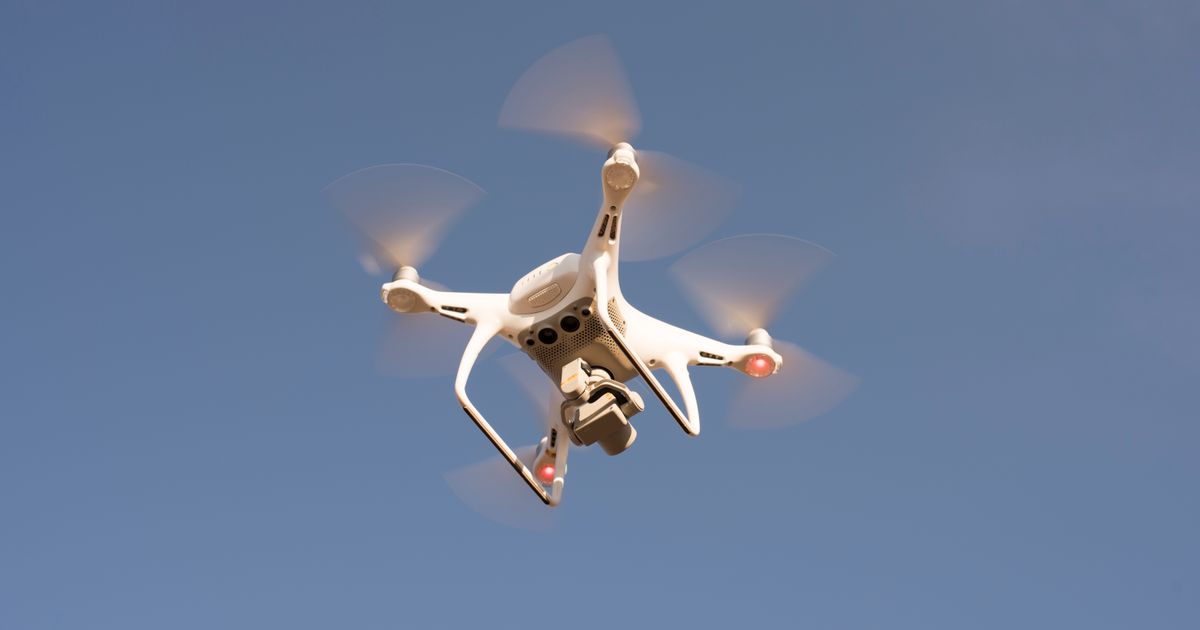
An aerial opening shot is one of the cheapest ways to make a corporate video, a property launch or an event reel look expensive. It is also the shot most likely to be commissioned on a wrong assumption. Search for Singapore’s drone rules and you will still find pages saying no permit is needed for a drone under 7kg flown below 200 feet. For a hobbyist, that is roughly the shape of the rules. For anything flown for a business, it is wrong.
The Civil Aviation Authority of Singapore (CAAS) is explicit. A drone flown for business outdoors needs an Operator Permit and a Class 1 Activity Permit “regardless of the weight of your UA, the location and height at which you fly your UA”, and the person flying it needs an Unmanned Aircraft Pilot Licence. A marketing video is business use. So is a wedding video, a property walkthrough and an aerial shot for a client’s social feed.
This guide explains what those permits are, what they cost and how long they take, where you cannot fly at all, what the PDPA asks of the brand that commissions the footage, and what to check before you hire a drone operator.
Why “business use” changes everything
Singapore regulates drones, which CAAS calls unmanned aircraft (UA), under the Air Navigation Act and its regulations. The rules split flying into three purposes: recreation, education, and everything else. For recreational flying, what you need depends on weight, height and location. For business flying, it does not.
CAAS’s Advisory Circular on permits (AC 101-2-1, revision 8, 3 July 2025) says a UA operator “must apply for a UA OP and Class 1 Activity Permit (AP1) for any activity that is … for business or for a purpose that is neither recreation nor education regardless of the mass of the UA”. Its appendix goes further and excludes from “recreation” any “recreational activity provided in the course of carrying on a business”. The circular’s own worked example is a wedding photographer taking aerial photographs at a hotel, described as a “commercial purpose”.
So the test is not whether the drone is small, or whether the shot is short, or whether the footage ends up only on Instagram. The test is whether the flight is done for a business. If a company is paying for the footage, or the footage promotes a business, assume it is.
The myth, and where it comes from
The “under 7kg, below 200ft, no permit” rule is a simplified version of the recreational thresholds. For recreational flying, CAAS sets weight bands at 250g (registration), 1.5kg (a training certificate), 7kg (a pilot licence) and 25kg (permits in all cases), and requires a Class 2 permit to fly above 200 feet above mean sea level, near an aerodrome or in a restricted area. Several pages that rank for drone filming questions still repeat the older simplification without the business caveat. If a supplier quotes it to you, that tells you something about the supplier.
The permits a marketing shoot needs
A business flight needs four things. The operator holds two of them, the pilot holds one, and the aircraft carries one.
| Requirement | Who holds it | What it is |
|---|---|---|
| UA Operator Permit (OP) | The operating company | Approves the organisation, its procedures and the UA types it flies. Valid one year. Once expired it cannot be renewed; a new application is needed. |
| Class 1 Activity Permit (AP1) | The operating company | Approves a specific activity: where, when and how. “A Class 1 Activity Permit is not valid without a UA Operator Permit.” |
| UA Pilot Licence (UAPL) | The person flying | Required for commercial flying “regardless of the UA’s weight”. Class A covers UA up to 25kg. Proficiency check every four years. |
| UA registration | The registered owner | Required for any UA over 250g. Registration labels cost S$25 each. |
Two further technical requirements sit on top. Since 1 December 2025, drones over 250g flown outdoors must broadcast a Remote ID, although CAAS exempts Operator Permit holders who use its FlyItSafe app during approved operations. Operator Permit holders must also fit a tracker under CAAS’s Core Flight Management System (CFMS).
The only exemption from the pilot licence for commercial flying is indoors in a space that is not publicly accessible. A drone shot inside a closed studio or a private warehouse is treated differently from one over a car park.
What the permits cost, and how long they take
CAAS publishes both. Its average processing times are 10 working days for an Operator Permit, 5 working days for an Activity Permit and 7 working days for a CFMS tracker including collection, “subject to the complexity of the proposed UA operations”. The Advisory Circular recommends applying for an Operator Permit at least one month before the activity, and at least three months ahead for flights beyond visual line of sight. Fees “cannot be refunded or transferred regardless of the application outcome”.
| Item | CAAS fee |
|---|---|
| Operator Permit, first UA type | S$700, plus S$200 CFMS subscription |
| Operator Permit, each additional UA type | S$500 |
| Operator Permit renewal | S$300, plus S$200 CFMS |
| Class 1 Activity Permit (not a light show) | S$120 per activity or block; S$45 for a repeat |
| Class 1 Activity Permit, light show | S$500; S$425 for a repeat |
| Class 2 Activity Permit | S$110; S$36 for a repeat |
| CFMS UA tracker | S$265, subject to GST |
| UA Pilot Licence | S$500 first category; S$200 each additional |
| UAPL theory test | S$136.25 including GST |
| Registration label | S$25 per drone |
Pilot training and assessment fees charged by training organisations are not set by CAAS, so they vary.
Worked example: what a client is really paying for
Take an established operator with one drone type. In its first year, CAAS’s own fees for the Operator Permit (S$900 including CFMS), a tracker (S$265), registration (S$25) and one pilot licence with theory test (about S$636) come to roughly S$1,826 before any training. After that, each new shoot needs its own Class 1 Activity Permit at S$120, or S$45 for a repeat of an approved activity.
None of that is expensive against a production budget. The point is that it is fixed overhead a legitimate operator carries and a casual one avoids. When an aerial add-on is quoted far below the market, the gap is often the permits. For how aerial shots fit into an overall production budget, see our guide to corporate video costs in Singapore.
What the 2025 changes made easier
CAAS relaxed several rules in February 2025. It removed the limit on the number of drones a person or company can register, allowed commercial flights up to 400 feet above mean sea level on all days of the week in designated areas (generally more than 6km from aerodromes), cut the approval time for those flights from five working days to three, and added a “Call Approval” function to the FlyItSafe app to replace phoning for airspace clearance. For an agency planning skyline shots away from airports, that is a real improvement in flexibility.
Where you cannot fly, whatever the permit
A permit does not open every location. Before a location is written into a storyboard, check four layers.
- Aerodromes and airbases. Flying within 5km of any civil aerodrome or military airbase needs specific approval. Singapore is small enough that this covers a large share of the island.
- Prohibited, restricted and danger areas. “UA activities are not allowed within prohibited areas at all times.” Protected areas also need a permit from the Singapore Police Force.
- Temporary restricted areas. CAAS sets these around events such as the National Day Parade, and tells operators to check OneMap. Any shoot planned around a national event, like the campaigns in our guide to using national symbols in marketing, should check this first.
- Parks and nature reserves. NParks says “the flying of drones is not allowed in all nature reserves, nature parks” and lists parks including Singapore Botanic Gardens, Fort Canning, Jurong Lake Gardens, the Rail Corridor and Pulau Ubin. Separately, “a permit is required for all filming and commercial photography in our parks”, applied for at least one month ahead, with no application fee, and NParks’ simplified small-scale route excludes drones.
Photographing protected places is its own issue. The Singapore Police Force says photography or videography of a protected area or place “is not allowed without the owner’s permission”. A skyline sweep that catches a protected installation is a problem even if the flight itself was approved.
People, crowds and events
CAAS’s safety guidance tells operators to keep the drone within line of sight at all times and never to fly over groups of people, public events or crowded areas, or near roads. The Advisory Circular requires the full business stack of Operator Permit, Class 1 permit and pilot licence for events attended by more than 50 people, and the activity permit application must say whether the flight is near an organised event where crowds are expected. For conference and launch shoots, our guide to event videography in Singapore covers the rest of the permissions an event shoot needs.
We could not find a blanket CAAS ban on night flying. Permitted times are set in each Activity Permit, and the Circular’s own example shows a permit running from 5pm to 11pm. Treat night shots as something to request in the application, not something to assume.
The part that lands on the brand: the PDPA
The aviation permits are the operator’s responsibility. Personal data is different, and this is the part of drone filming most brands do not know they own.
The PDPC’s Advisory Guidelines on Selected Topics (revised May 2024) have a chapter on drones. They say that where a drone operator captures photographs, video or audio “on behalf of and for the purposes of another organisation pursuant to a contract in writing, the other organisation is required to comply with the Data Protection Provisions”. In a typical marketing shoot, that other organisation is the brand. The operator may be a data intermediary; the brand is the one with the obligations.
What the guidelines ask for in practice:
- Notification. “An organisation must thus provide notification of the purposes for the collection, use or disclosure of personal data captured by its drones.” The PDPC suggests notices at points of entry to the area of operation, and signs at the launch site as good practice.
- Public places. Where people appear at an event or location open to the public, footage “would likely be personal data that is publicly available”, and may be collected, used or disclosed without consent. Notices are still recommended.
- Private events. Consent is needed. If someone later withdraws it, the organisation must stop future publication or mask the person.
- Flight discipline. The PDPC encourages keeping to a pre-determined flight path and restricting the use of personal data captured unintentionally, such as people in neighbouring properties.
For a property launch or an office shoot, the practical risk is not the crowd but the neighbours: residents on balconies, people inside offices with the blinds open. Frame the shot, brief the pilot, and review the edit for identifiable people who never agreed to appear. Our PDPA guide for marketers covers notification and consent more broadly.
What happens when it goes wrong
CAAS publishes the penalties. Under the Air Navigation Act, offenders “may be fined up to $50,000 or jailed up to two years, or both”. For pilot licence offences, CAAS lists up to S$50,000, two years, or both for a first offence, and up to S$100,000 and five years for subsequent offences. Flying an unregistered drone over 250g carries up to S$10,000, six months, or both, and the Remote ID offence carries the same.
Enforcement is real. CAAS reported that in 2023 it took action in 309 cases of unlawful drone operation, and that eight individuals and seven companies were prosecuted and fined between $4,000 and $45,000. In July 2024 a drone crashed into a residential building at One-North; CAAS charged the operating company, gave the pilot a 12-month conditional warning for flying without a pilot licence, and later limited the operator’s permit to aerial photography and videography. The June 2019 drone sightings near Changi Airport, which delayed about 37 flights and diverted one, remain the reason the airport zones are enforced so strictly.
For a brand, the exposure is less the fine than the fallout. A prosecuted flight in a published campaign ties your name to the incident, and footage shot without the right permits may need to be pulled.
Hiring a drone operator: the checklist
Because the aviation permits sit with the operator, the brand’s job is to verify them. Ask for these before you confirm the booking:
- Operator Permit number and expiry date, and confirmation that it covers the drone type they will fly.
- Class 1 Activity Permit for your date, time window and location, or a clear plan and timeline for obtaining it.
- Pilot licence for the person who will actually fly on the day.
- Registration label on the aircraft, and Remote ID or FlyItSafe compliance.
- Location clearance: aerodrome distance, restricted areas, NParks, venue and police permissions as relevant.
- Insurance. We could not find a CAAS requirement for third-party liability cover, but venues, landowners and your own contract may require it. Ask, and put it in writing.
- A PDPA plan: notices, consent forms where needed, and an agreed approach to people captured unintentionally.
Build the checklist into the brief and the contract. It protects the shoot date as much as the brand, because CAAS fees are non-refundable and a permit refused a week out means reshuffling the whole production.
Do you even need the drone?
Sometimes the honest answer is no. An aerial shot earns its place when location is the story: a new development, a resort, a large site, an outdoor event. For a talking-head explainer or a product demo, a well-lit ground shot does more. And for paid social, where the first seconds decide everything, a sweeping establishing shot can cost you the viewer. Our guide to video for social ads explains why the hook matters more than the scale.
If the finished video will play on a public screen, such as a mall LED wall or an event display, the Films Act can require it to be classified even though the same cut needs no classification online. That asymmetry is set out in our guide to film and video advertising rules.
Frequently asked questions
Do I need a permit to fly a drone for a commercial shoot in Singapore?
Yes. CAAS requires an Operator Permit and a Class 1 Activity Permit for any drone flown outdoors for business, regardless of its weight, the location and the height, and the person flying needs an Unmanned Aircraft Pilot Licence. The only exemption from the licence for commercial flying is indoors in a space that is not publicly accessible.
How long does it take to get drone permits in Singapore?
CAAS’s average processing times are 10 working days for an Operator Permit and 5 working days for an Activity Permit, and it recommends applying for an Operator Permit at least one month ahead. Since February 2025, approvals for commercial flights up to 400 feet in designated areas take three working days.
How much do drone permits cost in Singapore?
An Operator Permit costs S$700 for the first drone type plus S$200 for the CFMS subscription, and a Class 1 Activity Permit costs S$120 per activity, or S$45 for a repeat. A pilot licence is S$500 and registration labels are S$25. Training fees are set by training organisations, not CAAS.
Can I fly a drone in Singapore parks for a video?
Not in nature reserves, nature parks or the parks NParks lists, which include Singapore Botanic Gardens, Fort Canning and Jurong Lake Gardens. Commercial filming in any NParks park also needs an NParks filming permit, applied for at least one month ahead, and the simplified small-scale route excludes drones.
Do I need consent to film people with a drone?
Under PDPC guidance, footage of people at events or places open to the public is likely publicly available personal data and can be used without consent, though notices are recommended. Private events need consent. When an operator films for your business under a written contract, your business carries the PDPA obligations.
What is the penalty for flying a drone without a permit in Singapore?
CAAS says offenders under the Air Navigation Act may be fined up to $50,000, jailed up to two years, or both. Pilot licence offences reach S$100,000 and five years for repeat offences, and flying an unregistered drone over 250g carries up to S$10,000, six months, or both.
The takeaway
For a marketing shoot, there is no small-drone exemption. Business use means an Operator Permit, a Class 1 Activity Permit, a licensed pilot and a registered aircraft, whatever the drone weighs, and it means planning a month ahead. The permits are the operator’s to hold, and the brand’s to check. The PDPA duties for the footage are the brand’s own.
If you are planning a corporate or campaign video with aerial footage, our video production team handles the planning, permissions and shoot, and our corporate video production page shows how a full project runs. See our client case studies, and start with our complete guide to corporate video in Singapore.